
5.3. The evolution and diversity of photosynthesis#
Professor: Julian Hibberd (Department of Plant Sciences)
Learning objectives:
Understanding type I and type II reaction centres
Understanding photosystems
Understanding when oxygenic photosynthesis arose
Introduction#
This lecture provides:
An overview of the photosynthetic process;
A summary of photosynthetic life;
An analysis of traits associated with light-driven life, and how it may have evolved.
Overview of the photosynthetic process#
The apparatus used for oxygenic photosynthesis is intricate. There are two linked photosystems embedded in membrane
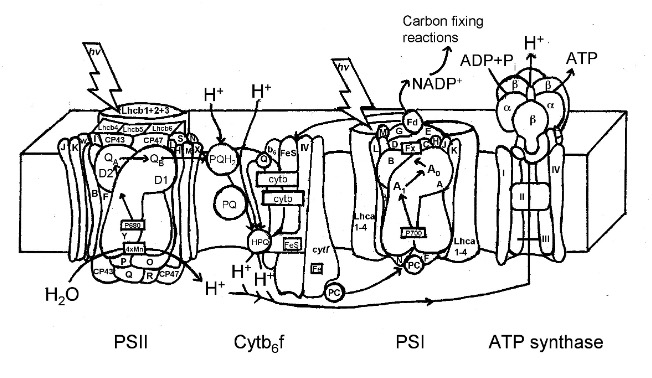
Fig. 5.11 The apparatus of photosynthesis#
The output of this complexity is at the global scale is:
A green planet;
An oxygen-rich atmosphere;
Conversion energy from the sun into biomass that sustains other life-forms.
The output of this complexity is at the molecular scale is:
Water splitting;
A light-driven electron transport chain allowing proton pumping across a membrane;
The synthesis of NADPH and ATP.
The whole process is summarised by the Z scheme.
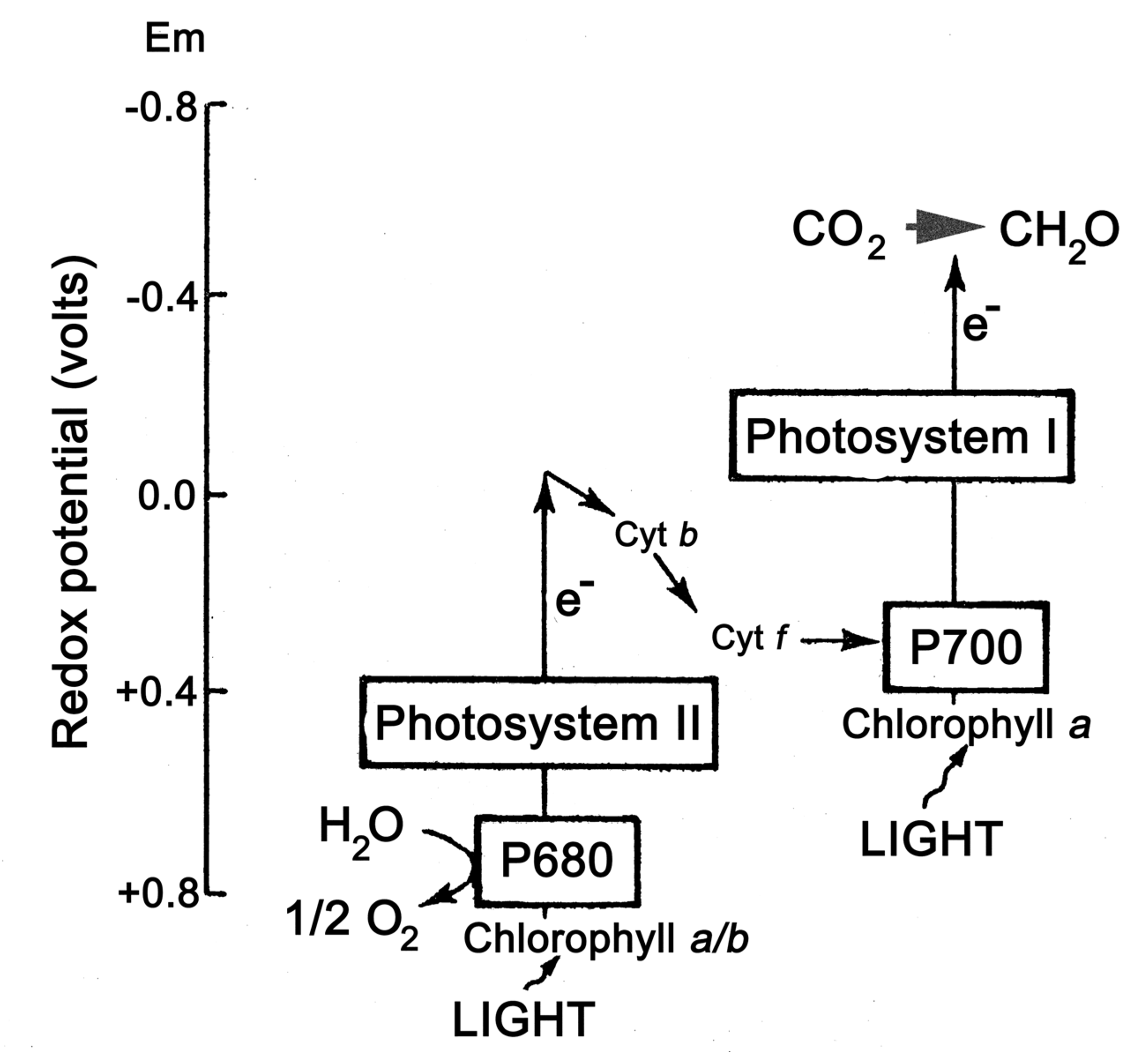
Fig. 5.12 Z scheme of photosynthesis.#
The photosynthetic process in plants#
The photosynthetic process in plants demands:
Light Harvesting Complexes - Pigment-protein complexes that collect light and pass energy to Reaction Centres (RCs).
Reaction Centres - Pigment-protein complexes containing a special pair of chlorophyll molecules and various acceptor molecules that allow electron transfer.
Electron transfer occurs from special pair to an acceptor, and then from donor to reaction centre.
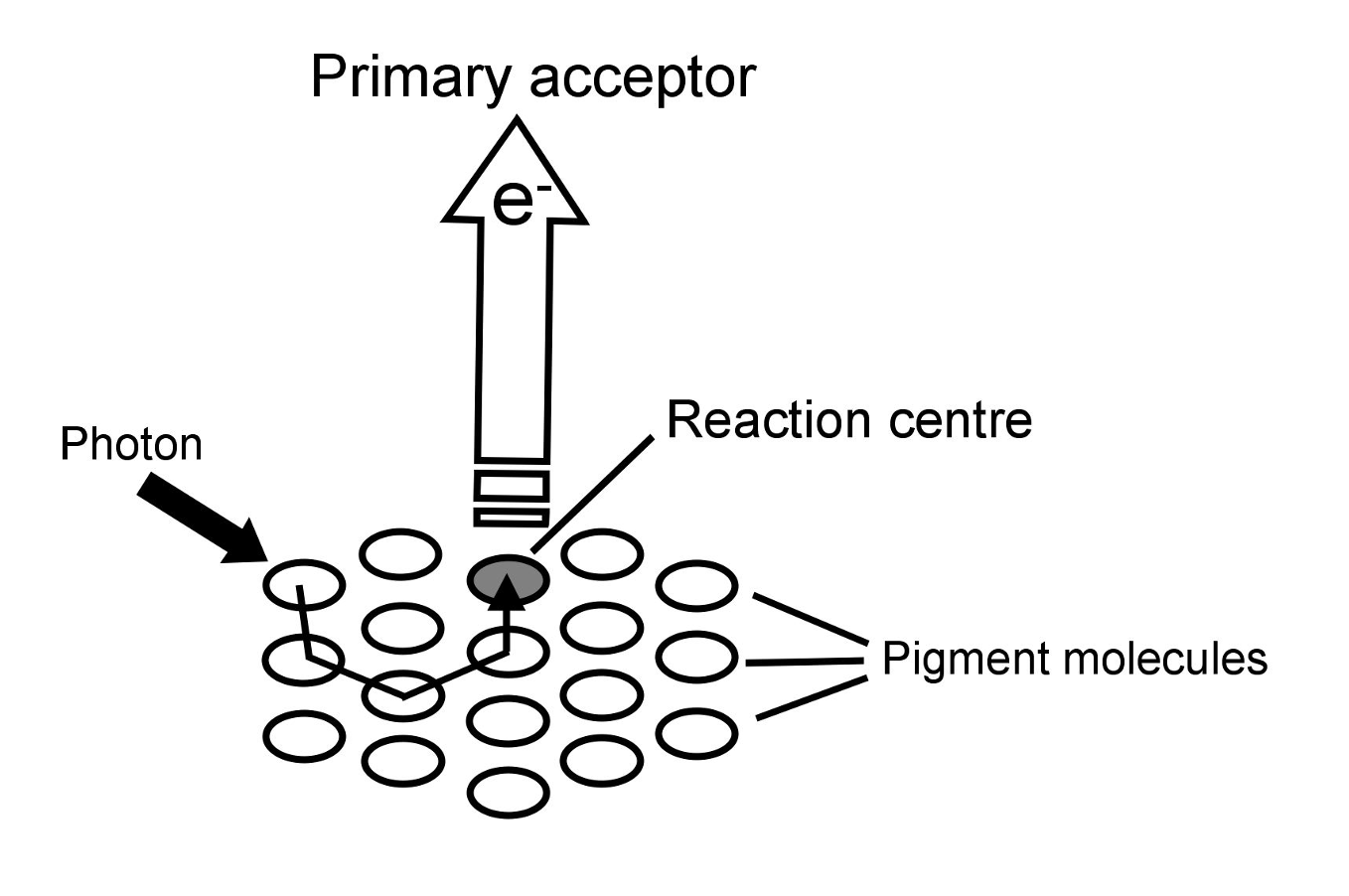
Fig. 5.13 Energy transfer in photosynthesis.#
The diversity of photosynthetic organisms and the origins of photosynthesis#
Photosynthetic organisms are found within the eukaryotes, the bacteria and the archaebacteria.
In the archaebacteria, halobacteria use a primitive type of photosynthesis.
In the eubacteria, photosynthetic organisms are widespread - green non-sulphur, green sulphur, heliobacteria, cyanobacteria and purple bacteria. There is considerable diversity in photosynthetic systems.
Halobacteria have a very simple system#
Extremely halophilic bacteria, restricted to a number of high salt environments e.g., Halobacterium halobium is partially autotrophic (uses light to provide some of its energy needs).
Light is captured by the purple pigment bacteriorhodopsin, which forms patches in the outer membrane.
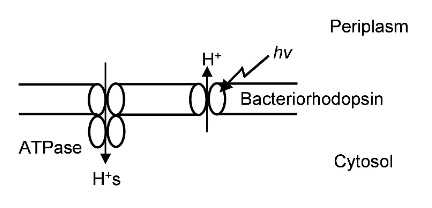
Fig. 5.14 Light driven processes in Halobacterium.#
Light capture by bacteriorhodopsin induces a conformational change, and drives a proton from the chromophore out of the cell. As protons diffuse back in, ATP is formed. n.b., water is not split, there are no light harvesting complexes, and no reaction centres.
Purple bacteria (eubacteria)#
Found in anoxic water and in sediments where there is light. Synthesis of photosynthetic apparatus inhibited by oxygen.
Bacteriochlorophylls (BChls) are found in Light Harvesting complexes (LHs) that surround reaction centres (RCs). The BChls absorb at longer wavelengths than chlorophyll.
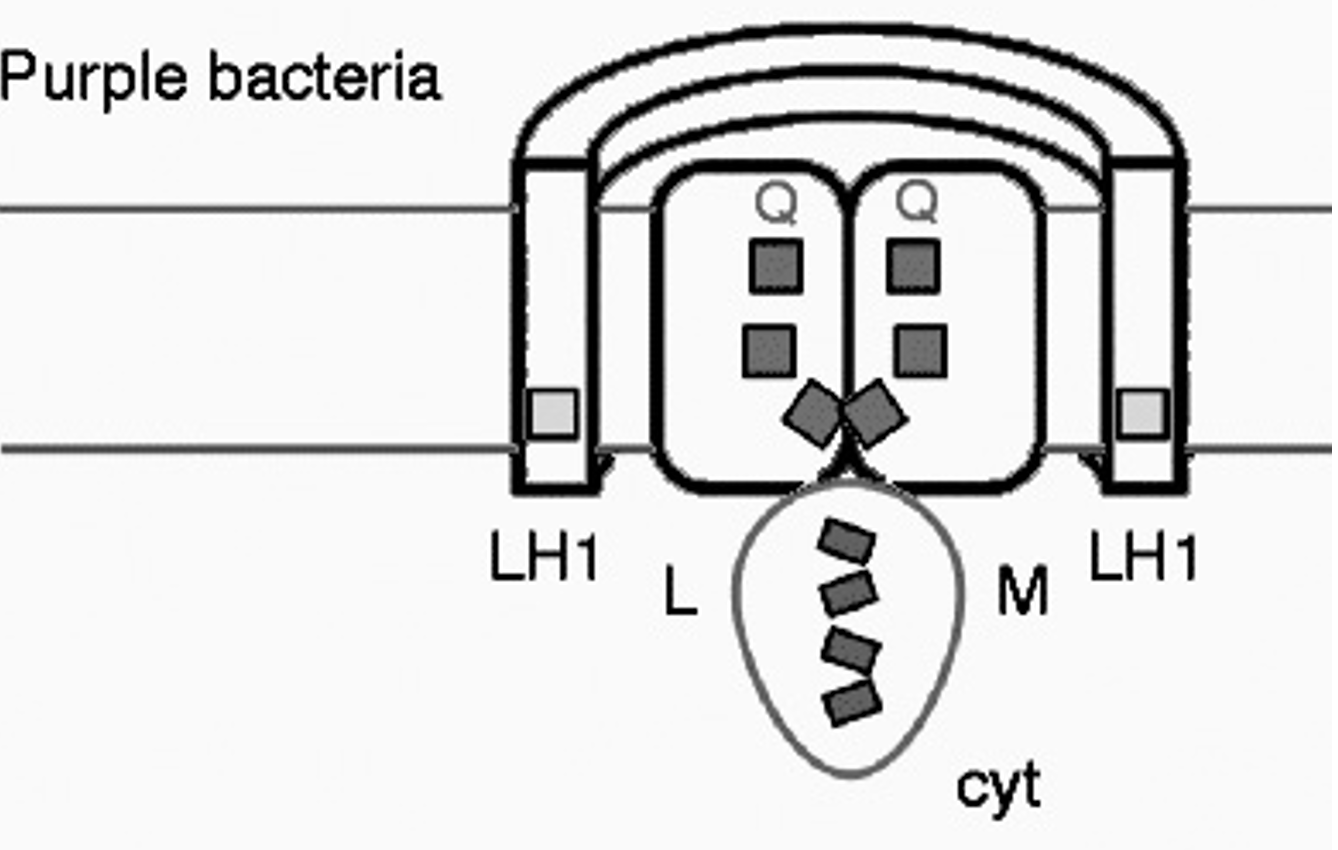
Fig. 5.15 Light harvesting complex and reaction centre in purple bacteria.#
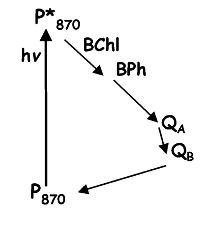
Fig. 5.16 Electron acceptors in the purple bacterium reaction centre.#
8 LHII rings channel excitation to a central LHI ring (in 3 picoseconds!) and then to the RC. Structures of LHs from purple bacteria have been elucidated.
The reaction centre from purple bacteria is composed of two core proteins (M and L), and 14 co-factors. Electrons move up one side of the RC, and the structure of the RC IS LIKE PSII of higher plants. Protons are moved from the cytoplasm to the periplasm.
Green bacteria (eubacteria)#
Divided into:
Green non-sulphur - filamentous and facultatively aerobic.
Green sulphur bacteria - restricted to anaerobic environments, and are obligately phototrophic. Some are adapted to high temperatures and salinity. Green sulphur bacteria use bacteriochlorophyll c, d and e, which form large light harvesting complexes known as chlorosomes. The reaction centre contains a dimer at the core, and LOOKS LIKE PSI from higher plants.
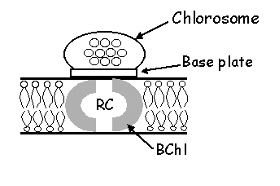
Fig. 5.17 Green bacteria photosynthesis.#
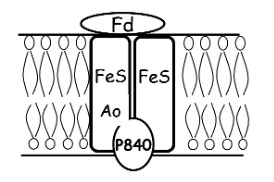
Fig. 5.18 Iron sulfur clusters in green bacteria.#
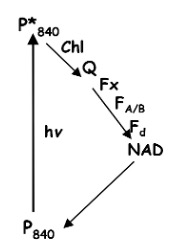
Fig. 5.19 Energy landscape.#
Cyanobacteria (eubacteria)#
By 2.5 billion years ago there is evidence of cyanobacteria (stromatolites). i.e., a form of light-driven metabolism probably developed early.
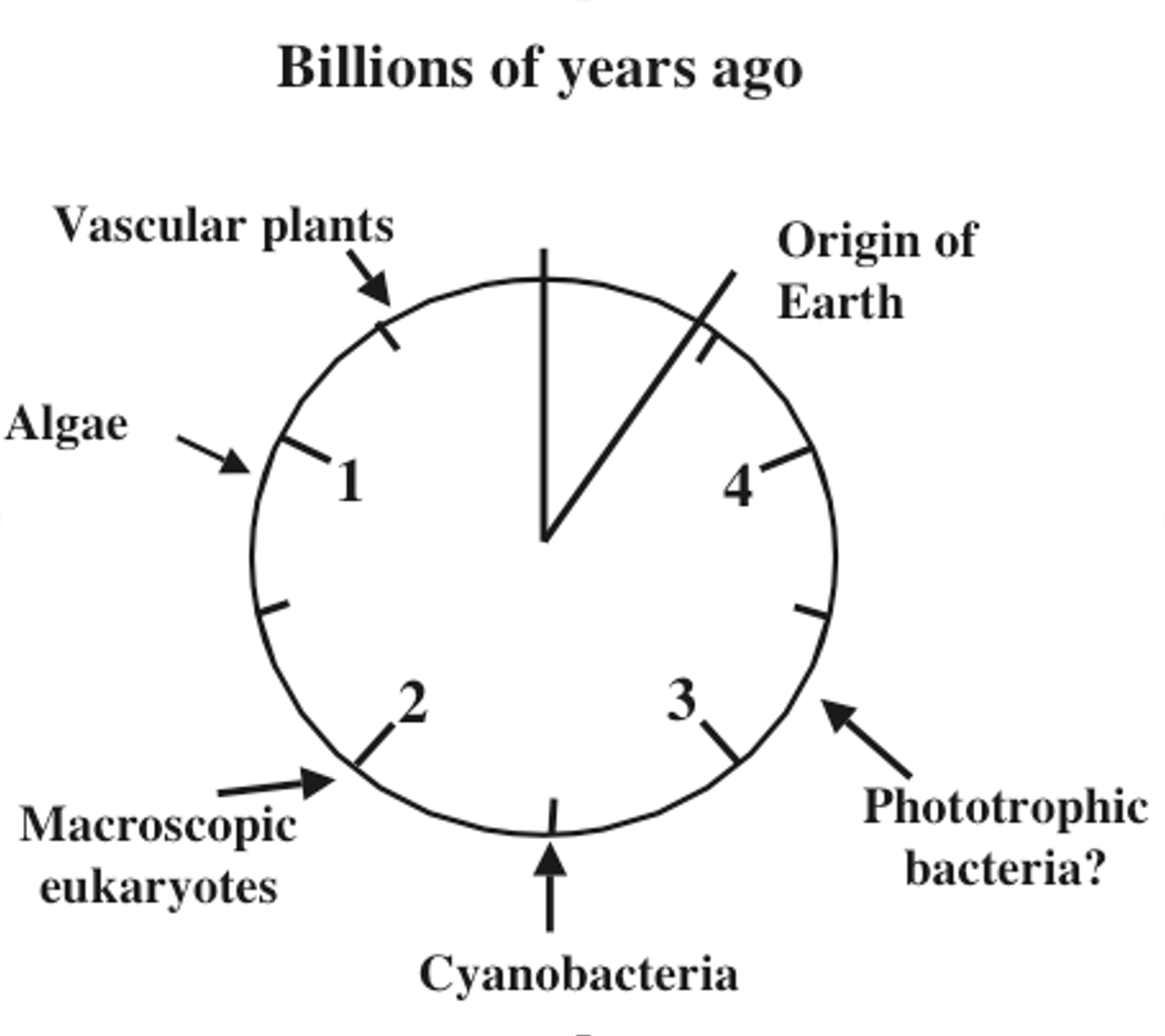
Fig. 5.20 Major evolutionary innovations.#
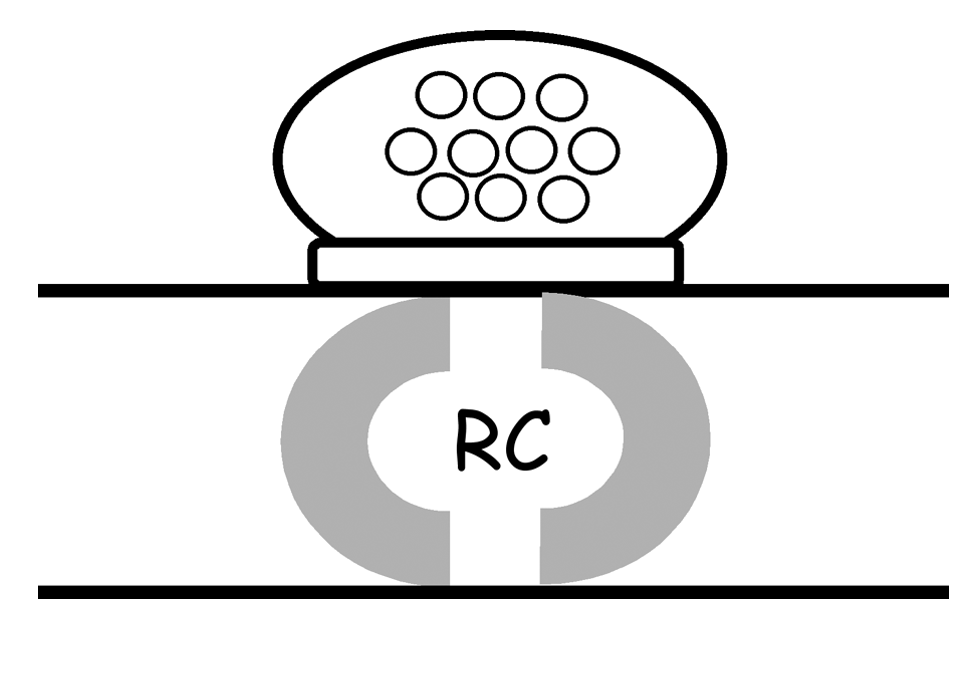
Fig. 5.21 Cyanobaceria schematic.#
They are the largest group of photosynthetic prokaryotes. Occupy a wide range of habitats: from oceanic, to freshwater to terrestrial. Often found in extreme environments e.g. UV, desiccating, high temperatures, low light and low CO2.
In some types the light harvesting pigments are bilins. In these cyanobacteria, structures known as phycobilisomes act as mobile peripheral antenna systems. Bilins can be visualised via fluorescence microscopy and their mobility recorded.
In other species, the antenna complexes contain chlorophylls. e.g., Prochlorococcus, an oceanic picoplankton (probably the most abundant photosynthetic organism on Earth).
Cyanobacteria possess two photosystems, carry out oxygenic photosynthesis, but possess no chloroplasts. PSII and PSI act together to split water and reduce NADP.
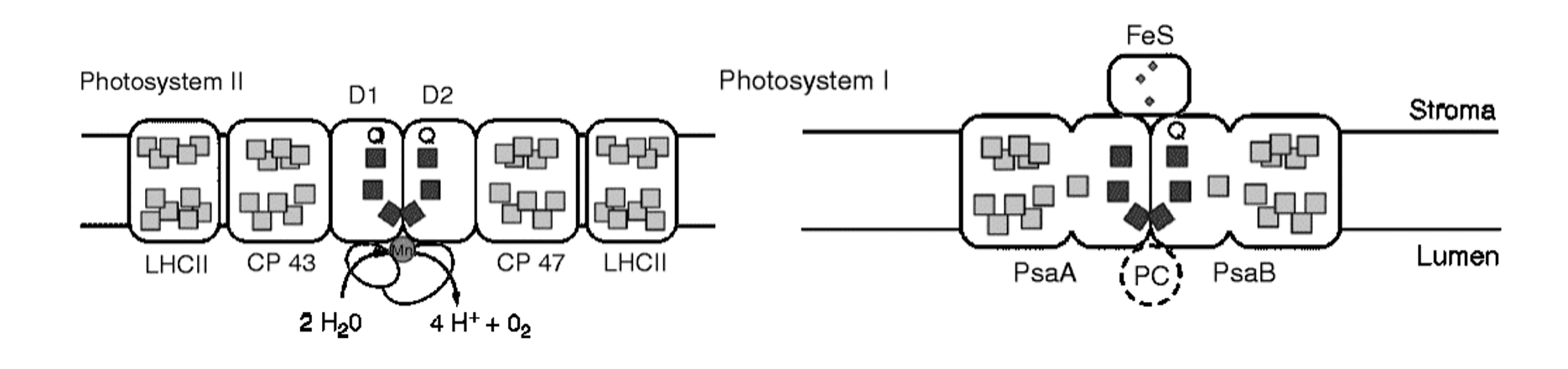
Fig. 5.22 Photosystem schematics.#
There are two hypotheses to explain the various types of reaction centres of oxygenic and anoxygenic photosynthetic organisms.
Two photosystems developed early in a single organism, and the various anoxygenic forms arose by loss of one or other of the photosystems.
Two classes of photosystem developed independently (although ultimately from one common ancestor), and they became linked by genetic fusion or a significant lateral transfer of genetic material.
So, the different types of prokaryotes have different LHCs and different reaction centres, but the reaction centres fall into only two groups - they either resemble PSI or PSII of higher plants.
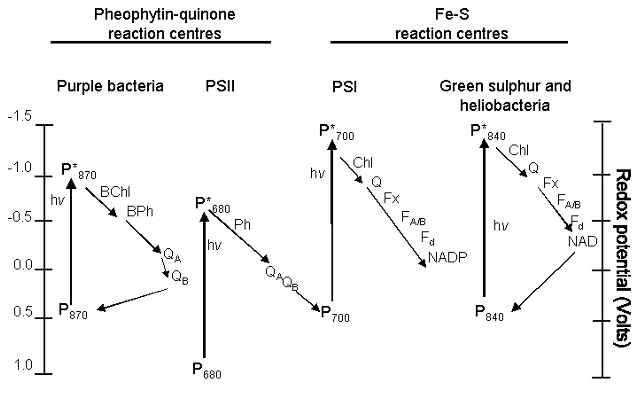
Fig. 5.23 Redox potentials across photosystems.#
It therefore looks like PSII is derived from the system used by purple bacteria, while PSI comes from a system used by the green sulphurs or the heliobacteria.
The resemblance is based on the donors and acceptors used after the initial excitation event in the reaction centre e.g. purple bacteria use similar donors and acceptors to PSII, while green sulphur and heliobacteria use similar donors and acceptors to PSI.
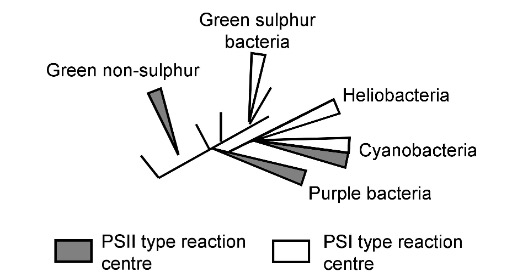
Fig. 5.24 Evolutionary tree of photosynthesising clades.#
Outcomes#
The content of this lecture should make you aware of the following facts regarding the evolution of photosynthesis:
Photosynthetic life is more diverse than the classical ‘two-linked photosystems’
This considerable diversity in photosynthetic life has informed current thinking about the evolution of oxygenic photosynthesis
References#
For more information see: Molecular Mechanisms of Photosynthesis by Robert Blankenship