
3.2. Mechanisms for climate homeostasis I. What we think we understand#
Professor: Ed Tipper (Earth Sciences)
Learning Objectives:
The Long-Term Carbon Cycle and Climate
Silicate and Carbonate Weathering and Carbon Consumption
The Organic Carbon Cycle
The Silicate Weathering Feedback: Earth’s Thermostat?
Controls on Silicate Weathering, and Modern \(\sf CO_2\) Hotspots
Maintaining an equable climate over most of the Earth’s history implies a negative feedback which regulates atmospheric \(\sf CO_2\), a key greenhouse gas. Something prevented Earth from becoming a runaway greenhouse like Venus, despite the continuous magmatic degassing over time [remember than Venus doesn’t have plate tectonics]. Silicate weathering and carbonate formation (temperature and precipitation dependent) and coupled burial of organic carbon have been cited as the major negative climate feedbacks. This lecture will discuss the textbook view of the negative climate feedback that is commonly referred to as Earth’s thermostat.
The Carbon Cycle and Climate#
The carbon cycle operates over a number of different time-scales. On short time-scales the major fluxes are photosynthesis and respiration, and exchange between the surface of the ocean and the atmosphere. On longer time-scales, deeper pools of carbon exchange with the atmosphere. On very long time-scales (\(\sf 10^6\)yrs), mineral weathering coupled to carbonate precipitation and the oxidation and burial of organic matter are thought to mediate the levels of atmospheric \(\sf CO_2\). In turn this removal of \(\sf CO_2\) probably stabilise long-term climate. Berner, 1999 provides a nice simple readable summary. In the context of current environmental change, the fluxes associated with weathering are small but recent estimates of the total carbon transfer through weathering and erosion are about 20% of the current increase in atmospheric \(\sf CO_2\).
Importantly, weathering is sensitive to climate. As temperature increases and the hydrological cycle intensifies, the attendant weathering fluxes of carbon should also increase with the current changing climate. The IPCC report, 2021 provides a detailed summary. A basic summary of both the long and short-term carbon cycle is illustrated in Fig. 3.17.
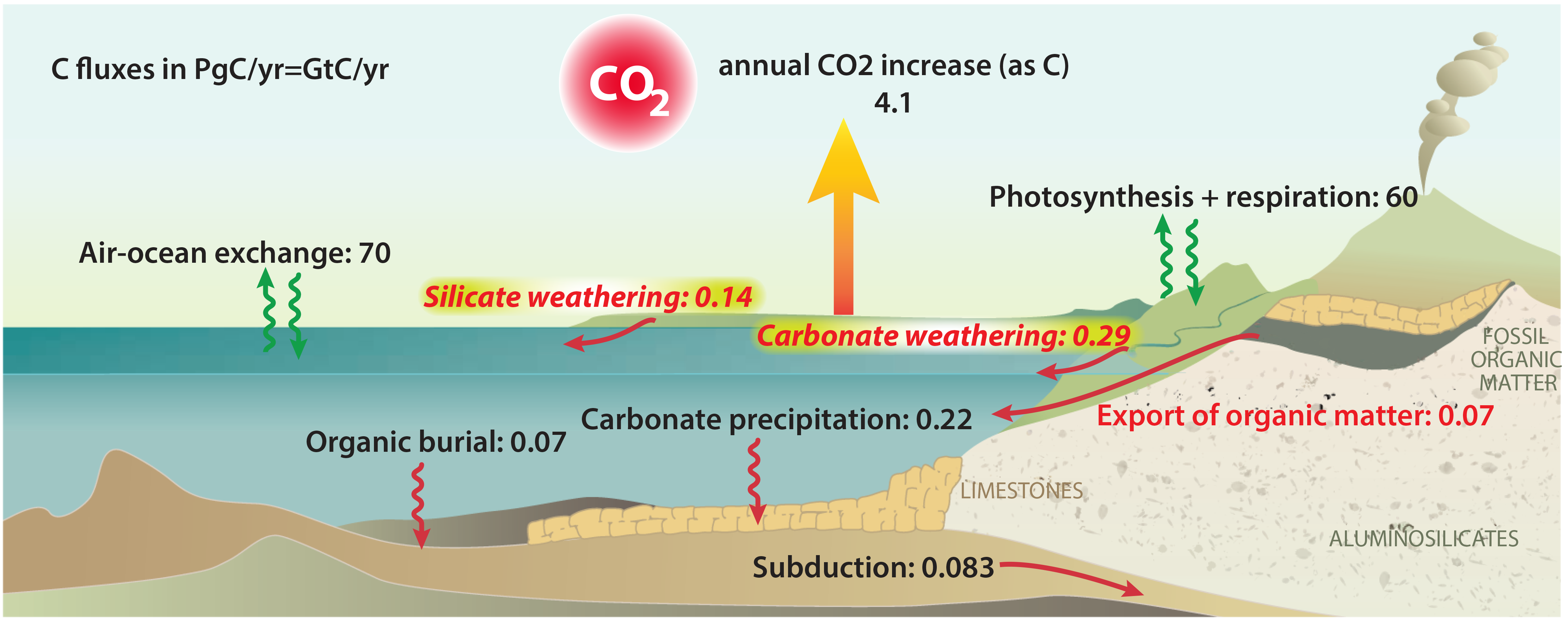
Fig. 3.17 Summary of the carbon cycle, modified from Gaillardet and Galy 2008#
Carbon Consumption Through Silicate Weathering#
Dissolving \(\sf CO_2\) in water gives carbonic acid (Equation (3.2)). All rain is mildly acidic naturally though this can be aggravated by pollution. Much, but not all weathering takes place in soil environments where \(\sf pCO_2\) in the soil pore waters can be much higher than atmospheric levels because of the respiration of decaying organic matter.
Formation of carbonic acid though \(\sf CO_2\) dissolution in water
The acidity of soil waters can therefore be high. This acidity is easily neutralised by the dissolution of silicate minerals (3.3) illustrates this schematically), and the conversion of carbonic acid to bicarbonate. This bicarbonate that makes up most of the alkalinity of natural waters with a neutral pH gets transferred to the oceans where it can have a residence time of tens of thousands of years.
Silicate weathering: Carbon sink through dissolution
Carbon Consumption Through Carbonate Weathering#
On time-scales of thousands to tens of thousands of years, carbonate weathering transfers carbon to the hydrosphere from the atmosphere where it can be stored for the residence time of dissolved inorganic carbon (mostly in the oceans). This may be important because carbonate weathering has faster reaction kinetics than silicate weathering Fig. 3.18. Carbonate rocks are ubiquitous and there are some, largely unrecognised signs that carbonate weathering may already be responding to anthropogenic global change.
Carbonate weathering: Carbon sink through dissolution
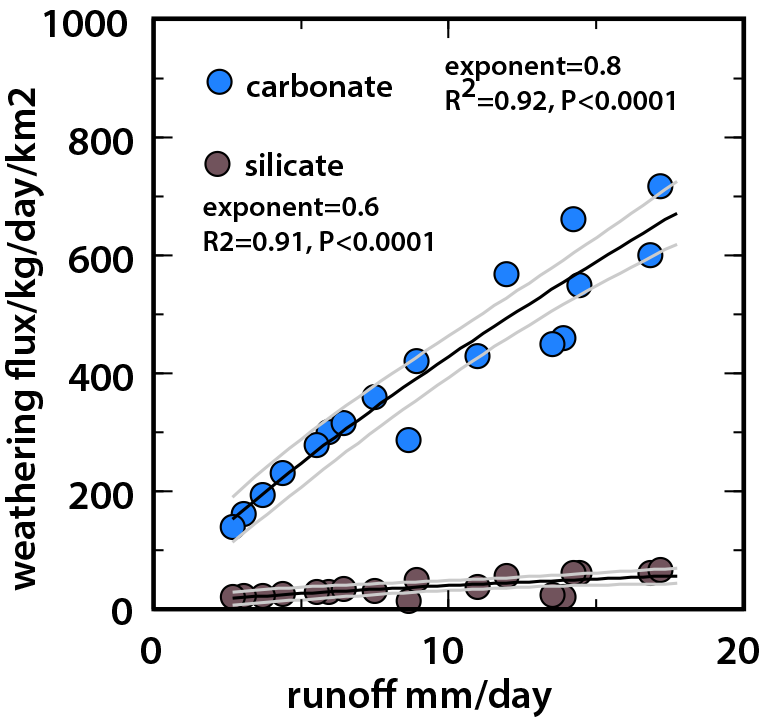
Fig. 3.18 Schematic diagram illustrating the different sensitivities of carbonate and silicate weathering to seasonal changes in runoff.#
The Net Carbon Transfer of Carbonate and Silicate Weathering#
On the time-scale of mineral dissolution (both carbonate and silicate), carbon is clearly moved from the atmosphere (where it contributes to the green-house effect) to the hydrosphere, where the is no contribution to the green-house effect. On \(\sf 10^6\)-\(10^7\)yr time-scales (typically referred to as geological time-scales) carbon gets transferred from the hydrosphere back to rock via the following reactions.
Formation of biogenic carbonate (limestone) from the products of silicate weathering
The dissolution products of silicate weathering combine to make calcium carbonate:
In most text-books, the net reaction of silicate mineral dissolution combined with biogenic carbonate precipitation is usually simplified to (3.6):
Urey reactions (silicate)
The overall result of (3.6) is that for every 2 moles of \(\sf CO_2\) that are consumed at the mineral dissolution stage, only one mole is consumed as calcium carbonate in the geological record.
In contrast, the products of the carbonate weathering reaction combine to make biogenic carbonate as follows:
Urey reactions (carbonate)
In this case, over long time-scales, there is no net consumption of \(\sf CO_2\) since for every mole of \(\sf CO_2\) consumed during dissolutuion, one mole of \(\sf CO_2\) is released during carbonate precipitation.
Non-Calcium Bearing Silicates#
The reactions so far only include Ca-bearing silicate minerals. This is because Ca readily combines with the carbonate ion to form Ca-carbonate.
In theory, the weathering of Mg, Na and K silicates should also lead to the drawdown of \(\sf CO_2\). However, since it is almost impossible to form Na and K carbonates in nature, they will not form a carbon sink on long time-scales. Mg may be removed by the formation of Mg-carbonates such as dolomite. However, the geological record shows a highly variable proportion of dolomite to total carbonate over geological time Fig. 3.19. Some workers have argued that there has been very little dolomite formation in the last 60Ma and also that a significant proportion of the dolomite in the geological record is secondary (produced through diagenesis) and not primary (though whether this matters for the long term carbon cycle is another matter). However, it is thought that the weathering of Mg silicates probably does contribute significantly to the drawdown of \(\sf CO_2\) via an exchange with Ca during hydrothermal circulation at mid-ocean ridges. Hydrothermal fluids are highly depleted in Mg but enriched in Ca, and it is thought that there is a stoichiometric exchange of Mg for Ca, which in turn can form Ca carbonate drawing down \(\sf CO_2\) over million year time-scales [We will return to hydrothermal circulation in the next lecture.].
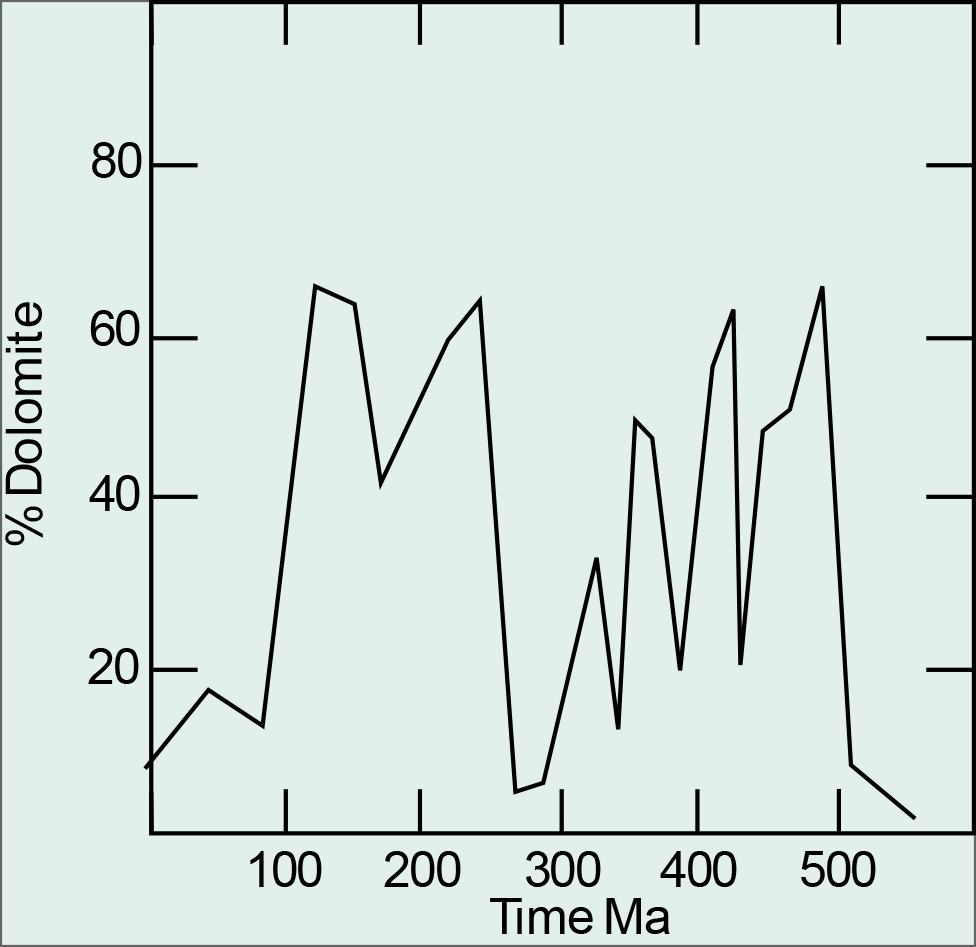
Fig. 3.19 The abundance of dolomite (\(\sf Mg_{0.5},Ca_{0.5}CO_3\)) in the geological record.#
The weathering and transfer of organic matter#
The long-term transfer of organic carbon from the continents to the oceans, either as modern biospheric organic carbon (\(\sf OC_{biospheric}\)) or in the form of the oxidation of fossil organic carbon (referred to as \(\sf OC_{Petro}\)) is a major sub-cycle of the total carbon cycle, affecting both \(\sf CO_2\) and \(\sf O_2\). The transfer and burial of organic matter in sediments represents a net excess of photosynthesis over respiration and can be represented by the schematic reaction normally applied to photosynthesis. To complete the organic sub-cycle, \(\sf O_2\) is consumed and \(\sf CO_2\) produced by the oxidation of organic matter in old sediments exposed to weathering on land.
Organic carbon burial)
Organic matter is eroded and transported as particulate organic carbon (POC) within the suspended sediment in rivers. This transfer can result in the release or consumption of \(\sf CO_2\), depending on the source of the POC and its fate during sedimentary processes. For example, 70-85%\ of the POC buried in the Bengal Fan is biospheric, and carbon has been removed from the atmosphere for millions of years. Alternatively, if the POC is mainly derived from sedimentary rocks (e.g. organic matter from shales), then this can be oxidised during transport, releasing \(\sf CO_2\) back to the atmosphere after millions of years of storage. This reaction also schematically represents the overall process of the thermal breakdown of organic matter, followed by the degassing to the surface of reduced carbon-containing gases (exemplified by \(\sf CH4\)) and their rapid oxidation to \(\sf CO_2\) by atmospheric \(\sf O_2\).
Organic carbon oxidation)
The strength of the weathering feedback#
The generic reactions for the dissolution of silicate and carbonate minerals remove of \(\sf CO_2\) (a key greenhouse gas) from the atmosphere. The dissolution rates of minerals are dependent on temperature, runoff, and supply of material through erosion.
Effect of temperature#
Reaction rates are dependent on temperature, typically though the Arrhenius expression of the form:
where \(k\) is a rate constant, \(E_a\) is an activation energy which is always positive.
An example of this is shown for the dissolution of quartz and amorphous silica Fig. 3.20.
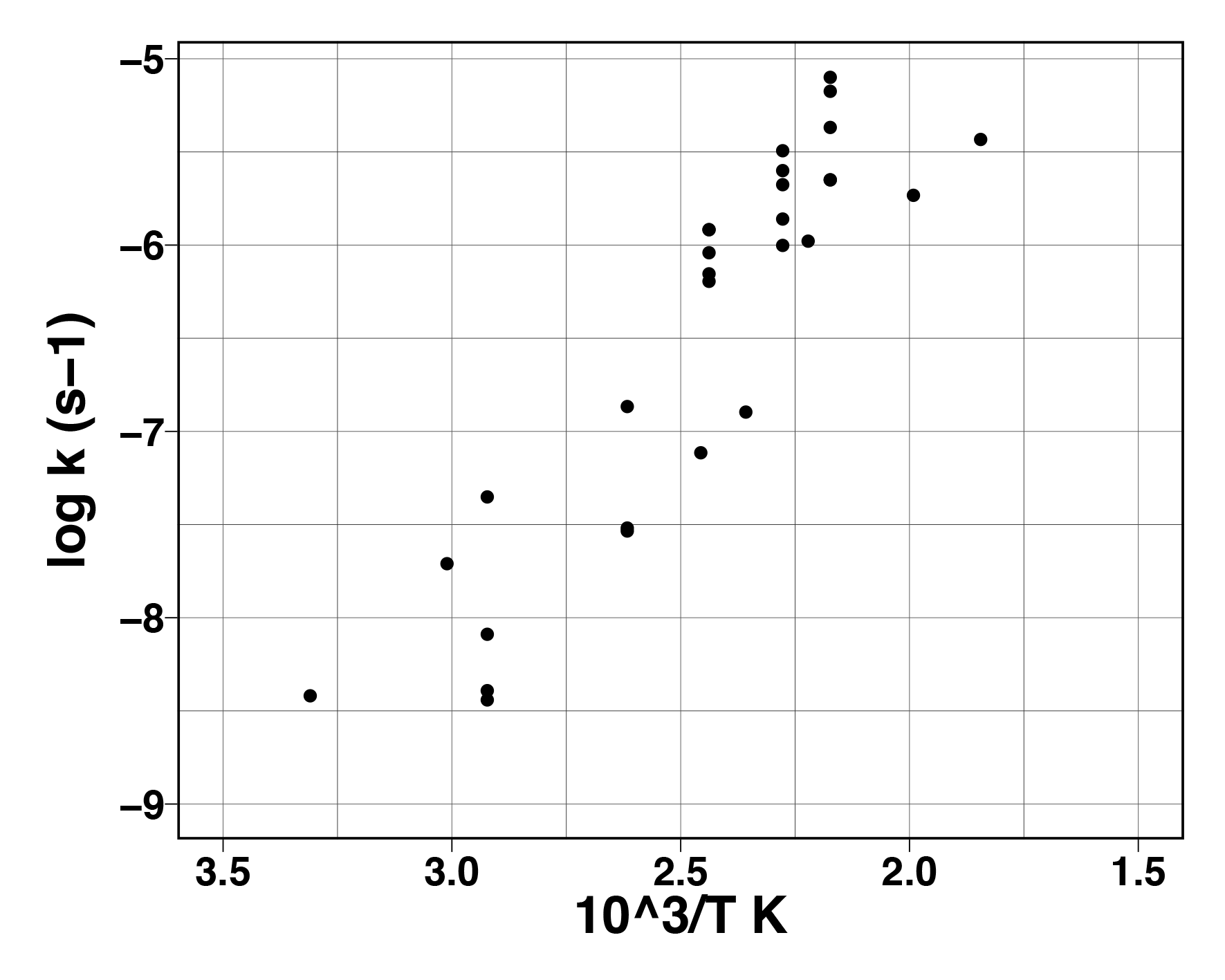
Fig. 3.20 Example of the temperature dependence of mineral dissolution rates (in this case quartz and amorphous silica).#
Supply of material and erosion rates#
No chemical reaction can proceed without reactants, no matter what the temperature. In the context of chemical weathering, reactants are supplied via mechanical erosion that 1) supplies sediment into the weathering reactor, and 2) grinds the material up by mechanical abrasion into finer particles that react more rapidly with a greater surface area. Erosion rates are highest in mountain belts such as the Himalaya which are thought to play an important global role in controlling the supply of solutes to the hydrosphere [and removing carbon from the atmosphere, more of that later]. The physical mechanisms that supply sediment are important. The Himalaya is a monsoonal region and erosion rates are highest at times of greatest rainfall. Stream power is the amount of energy the water in a river or stream is exerting on the sides and bottom of the river. Stream power is the product of the density of the water, the acceleration of the water due to gravity, the volume of water flowing through the river, and the slope of that water. There are other mechanisms of erosion that are important in mountainous regions, such as landsides (sometimes driven by earthquakes), or glaciers.
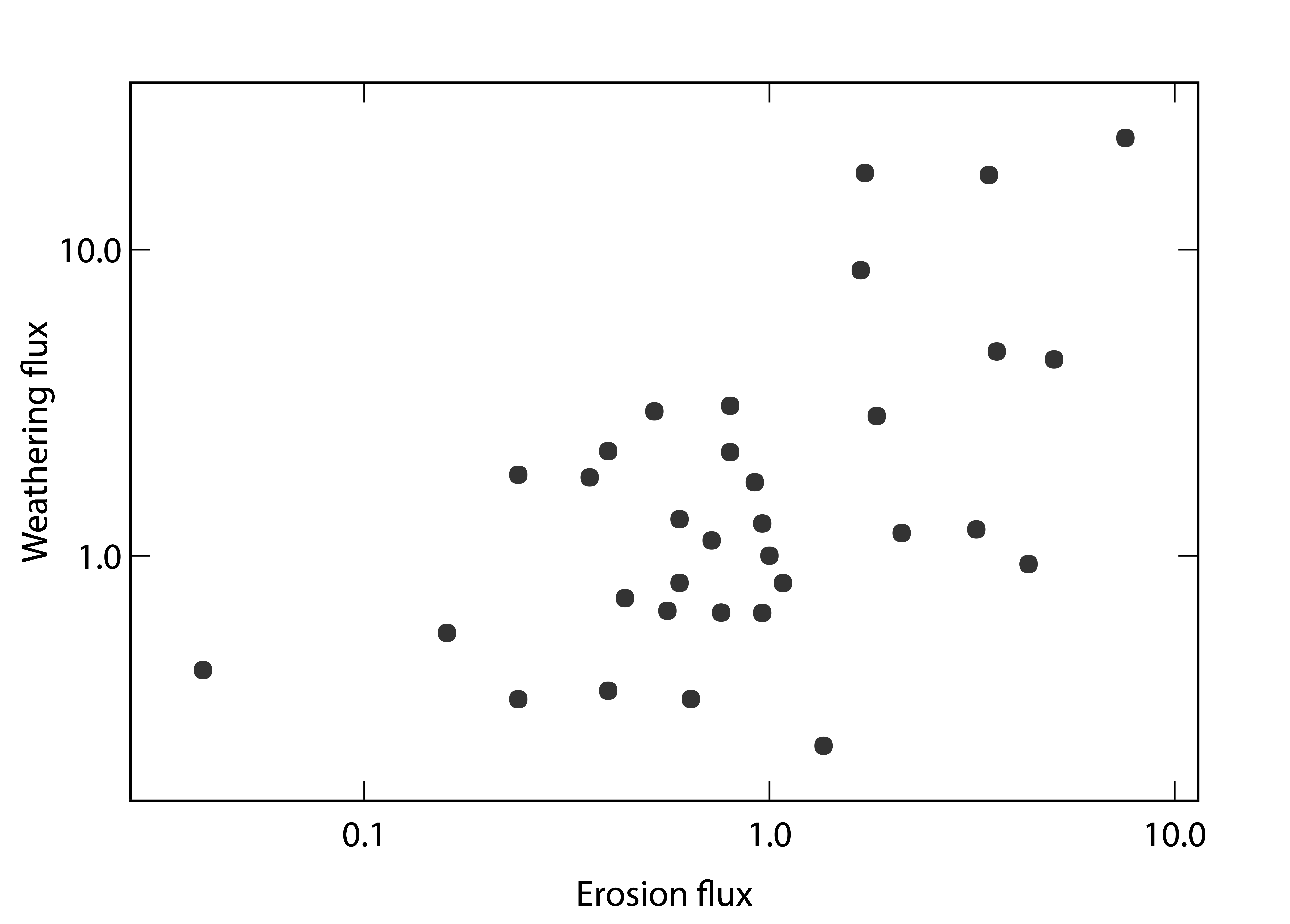
Fig. 3.21 Example of the dependence on the total weathering flux (arbitrary units) on erosion rates (arbitrary units) in the world’s largest rivers. Data from: Gaillardet, 1999.#
Runoff and rainfall#
Runoff exerts a two-fold control on the flux of elements released to the hydrosphere. Firstly, it increases erosion rates as discussed above. Secondly, it dilutes waters, under-saturating them, driving them further from equilibrium and increasing the driving force for mineral dissolution. There is a clear global control between runoff and weathering flux Fig. 3.22.
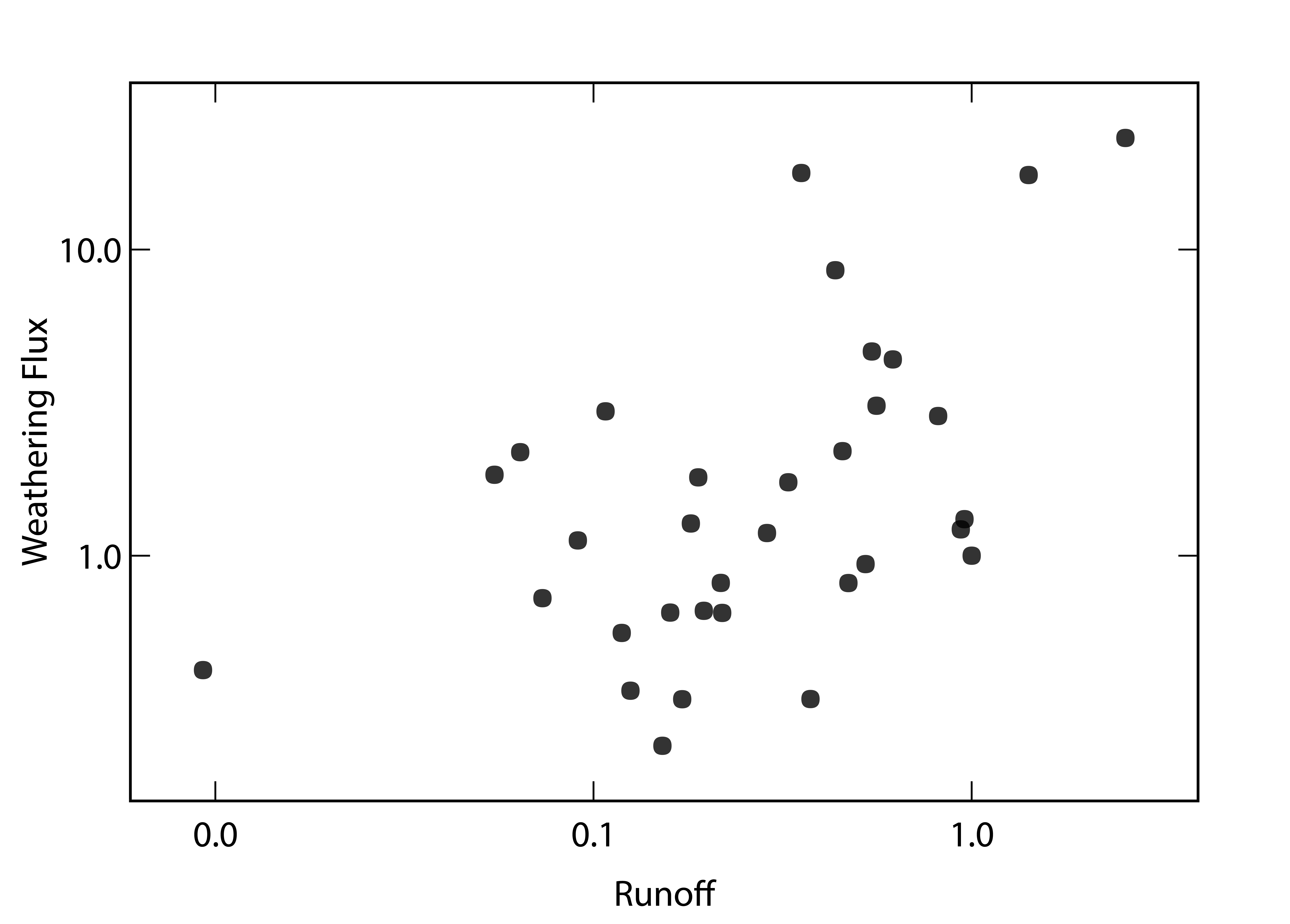
Fig. 3.22 Example of the dependence on the total weathering flux (arbitrary units) on runoff (arbitrary units) in the world’s largest rivers. Data from: Gaillardet, 1999.#
Dissolution in the real world#
In practice, dissolution rates depend on a range of factors which act together, erosion, temperature, runoff, acidity, secondary mineral formation Fig. 3.23.
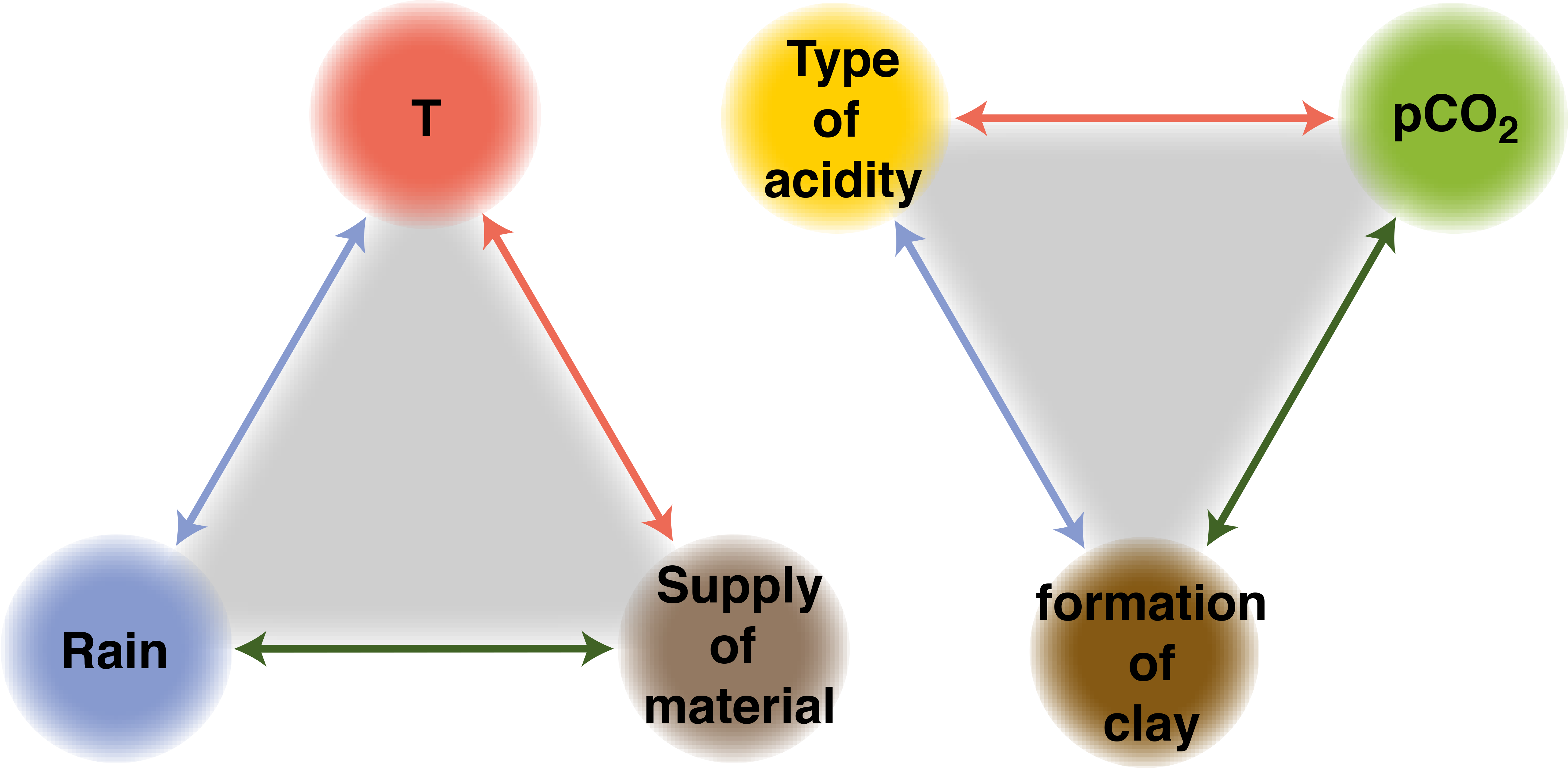
Fig. 3.23 Schematic showing the key controls on mineral dissolution rates.#
Ultimately, without the supply of material, the other factors cannot be important.
Weathering hot-spots in the modern day#
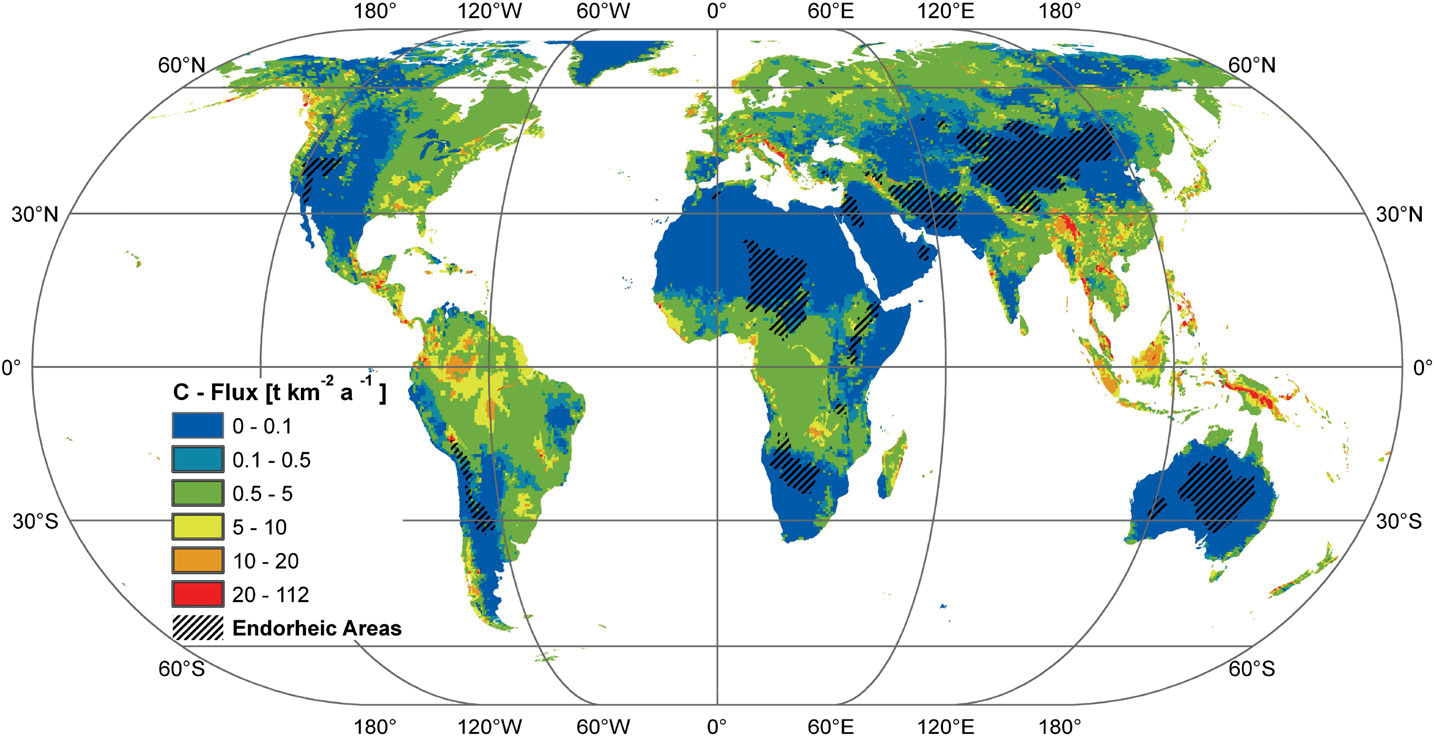
Fig. 3.24 Estimates of the modern day spatial distribution of carbon consumption via silicate weathering in the present day from Hartmann et al., 2009.#
The factors that control chemical weathering lead to carbon removal hotspots. What limits the total amount of removal of \(\sf CO_2\) from the atmosphere via weathering? Provided that there are sufficient reactants delivered into the weathering zone
by erosion, the fundamental limit on \(\sf CO_2\) removal is the dissolution rate of minerals. This is said to be a kinetic limit or a weathering limit. In the case where there is a limited supply of minerals via erosion, the weathering regime is said to be supply-limited or transport limited. This has major implications for the strength of the silicate weathering feedback, Earth’s thermostat.
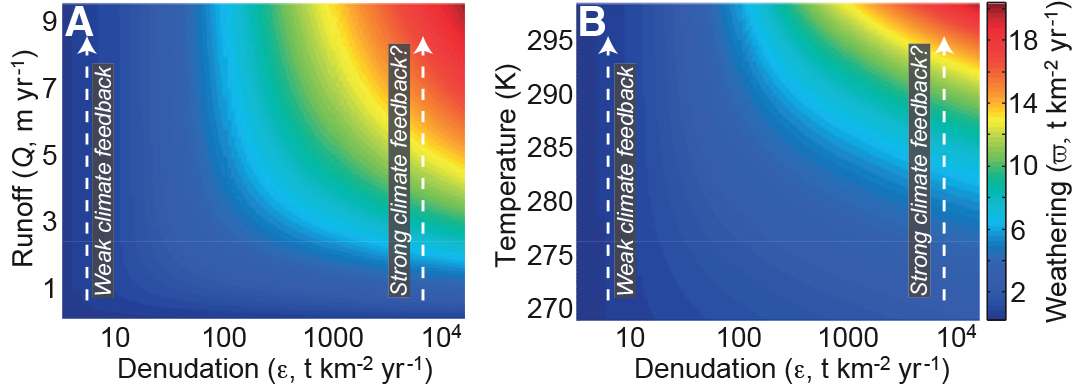
Fig. 3.25 Conceptualisation of the intensity of the weathering feedback as a function of runoff, temperature and supply of material through erosion from West et al, 2012.#