
4.12. Detecting Biosignatures II#
Lecturer: Savvas Constantinou (Institute of Astronomy)
Key Concepts:
How habitable exoplanets can be detected
Different types of atmospheric spectroscopy
Factors affecting the detectability of a biosignature gas
What is achievable today with state-of-the-art facilities and techniques
Proposed future facilities to detect habitable worlds and signs of life
We have previously considered what a biosignature is and focused on what properties a chemical species must have in order to be a robust biosignature gas. We now consider how such biosignature gases may be detected in an exoplanetary atmosphere and what factors affect their detectability.
The most readily observable exoplanets today are transiting: from the point of view of Earth, they pass in front (primary occultation) and behind (secondary occultation) of their host star. This lecture will focus on these planets which are currently the key focus in the search for life elsewhere. We will also consider potential future missions that seek to go beyond the transiting regime at the end.
Detecting Habitable Exoplanets#
The first challenge is in finding a habitable exoplanet in the first place. This remains a monumental challenge and we have not yet found an exact Earth twin, i.e. an Earth-like planet orbiting a Sun-like star. We can presently detect Earth-sized planets around much smaller stars, or much larger planets around Sun-like stars.
Transiting planets can be detected in two complementary ways:
Transit method: measuring the decrease in the apparent brightness of the host star as the planet passes in front of it from Earth’s point of view,
Radial velocity method: measuring the Doppler shift in the host star’s spectrum as it and the planet orbit their barycentre.
The transit method measures the planet’s size (radius) while the radial velocity method measures its mass. As such, both are needed in order to determine what kind of planet is detected.
For the transit method, the amount by which the apparent brightness decreases when a planet passes in front of its host star is the ratio of the projected areas of the planet and the star, which simplifies to:
where \(R_\mathrm{P}\) and \(R_\mathrm{S}\) are the planet and the star’s radii. If we know the star’s radius, we can determine the planet’s radius. This effectively models the planet as a fully opaque sphere. Detecting an Earth-like planet around a Sun-like star would therefore require measuring a change in brightness by a factor of 0.0008.
For the radial velocity method, the amplitude of the star’s velocity oscillations is bigger for more massive planets and less massive stars. To detect an exo-Earth orbiting a Sun-like star using the radial velocity method requires being able to measure velocity oscillations with an amplitude of 9 cm/s.
As such, detecting an exact Earth analogue is extremely challenging. Nevertheless, small Earth-like planets have been detected, some in the habitable zone of their much smaller host stars, such as the Trappist-1 system. It is also possible that planets larger than Earth may also be capable of harbouring habitable conditions on their surfaces.
Atmospheric Spectroscopy: Transmission#
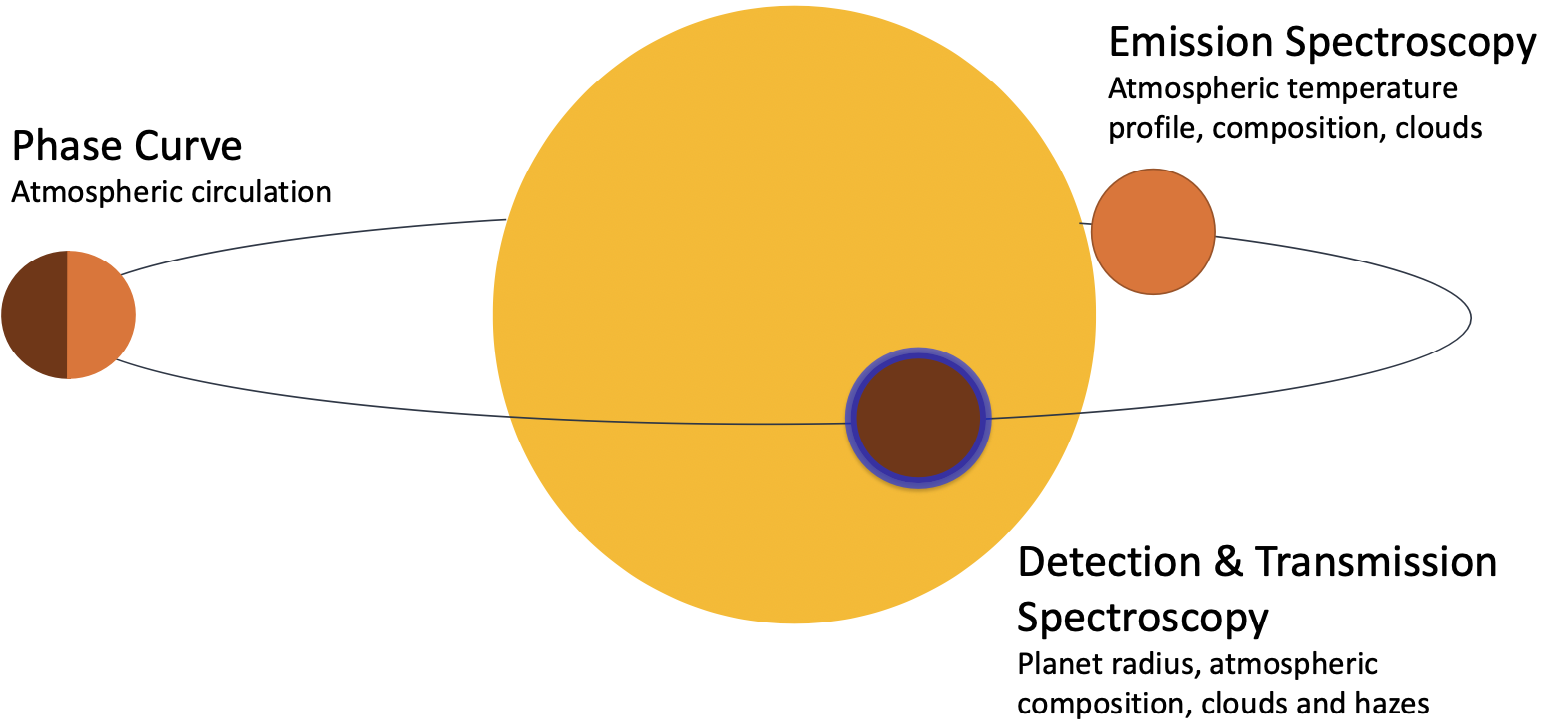
Fig. 4.84 Schematic showing how different parts of a transiting planet’s orbit can be used to characterise its properties.#
As a planet passes in front of its host star, it blocks a small fraction of starlight, giving rise to the dip in brightness discussed above. Futhermore, an even smaller fraction of starlight isn’t blocked by the bulk of the planet, but instead passes through its atmosphere, with some of it being absorbed by chemical species, clouds and hazes. As such, with sufficiently sensitive spectroscopic instruments, it is possible to measure the transmission spectrum of an exoplanetary atmosphere.
The transmission spectrum effectively is a correction term \(H_\mathrm{A}\) to the above transit depth expression to account for the additional starlight absorbed by the atmosphere at a given wavelength \(\lambda\):
The correction term \(H_\mathrm{A}\) depends on how extended the atmosphere is and how opaque it is. The extent of an atmosphere, described by its scale height \(H\), roughly depends on its temperature \(T\) mean molecular weight \(\mu\) and the planet’s gravitation acceleration g:
where \(k_\mathrm{B}\) is the Boltzmann constant. The most observable atmospheres therefore are hot (\(\gtrsim 1000K\)), hydrogen-dominated (hence low \(\mu\)) and belong to low-density planets. For this reason, hot Jupiters have dominated the study of exoplanetary atmospheres until the arrival of the James Webb Space Telescope (JWST), which .
Transmission spectroscopy primarily probes the planet’s atmospheric composition and thermal structure, as well as any clouds or hazes that may be present. Cutting-edge observations with the James Webb Space Telescope have begun probing the properties of temperate sub-Neptune planets such as K2-18b, leading to the transmission spectrum shown in Figure Fig. 4.85. As can be seen on the y-axis of the figure, transmission spectroscopy requires measuring variations in the transit depth on the order of 100 ppm or smaller.
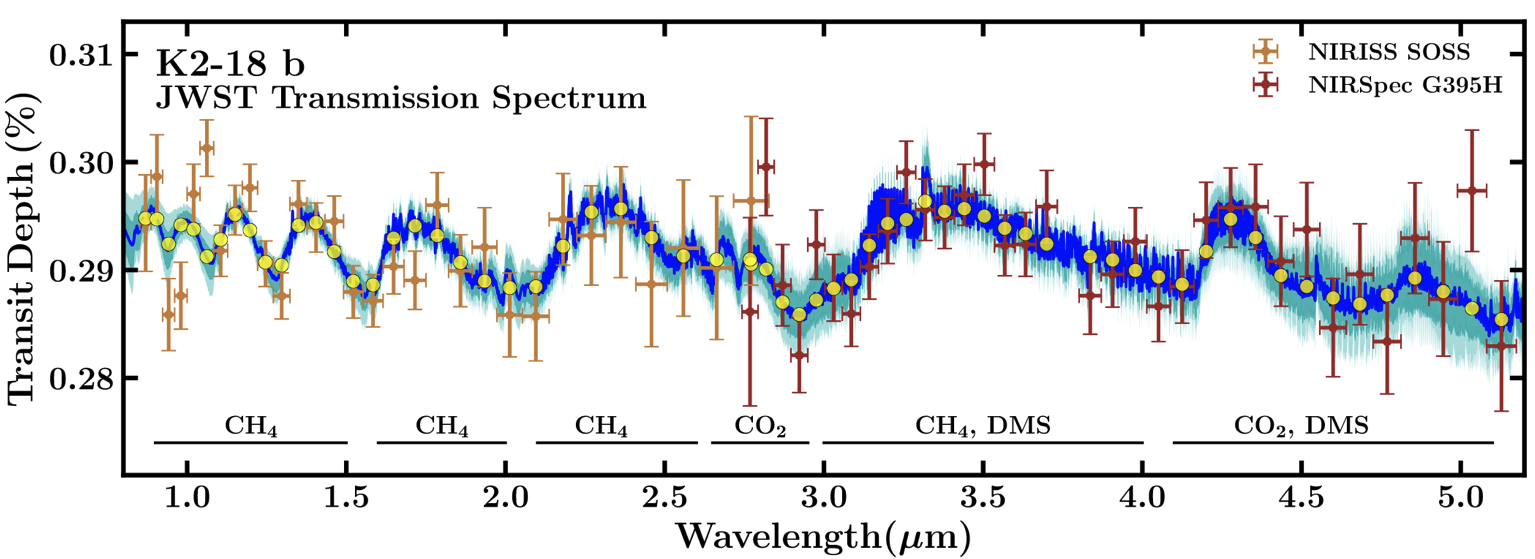
Fig. 4.85 Transmission spectrum of K2-18b, a habitable-zone sub-Neptune orbiting a cool M dwarf star (Madhusudhan 2023).#
Atmospheric Spectroscopy: Emission#
Emission spectroscopy can be carried out by comparing the observed spectrum just before the planet passes behind its host star to that observed while the planet is fully behind the star. This means we can isolate the planet’s emission spectrum as a fraction of that of its host star. From this spectrum we can primarily extract the planetary atmosphere’s thermal structure, as well as its composition and cloud/haze properties. This technique favours larger and hotter planets, as their more extended atmospheres radiate more strongly. As a rule of thumb, emission spectroscopy requires roughly an order of magnitude greater sensitivity than transmission spectroscopy.
Detectability of a Biosignature Gas#
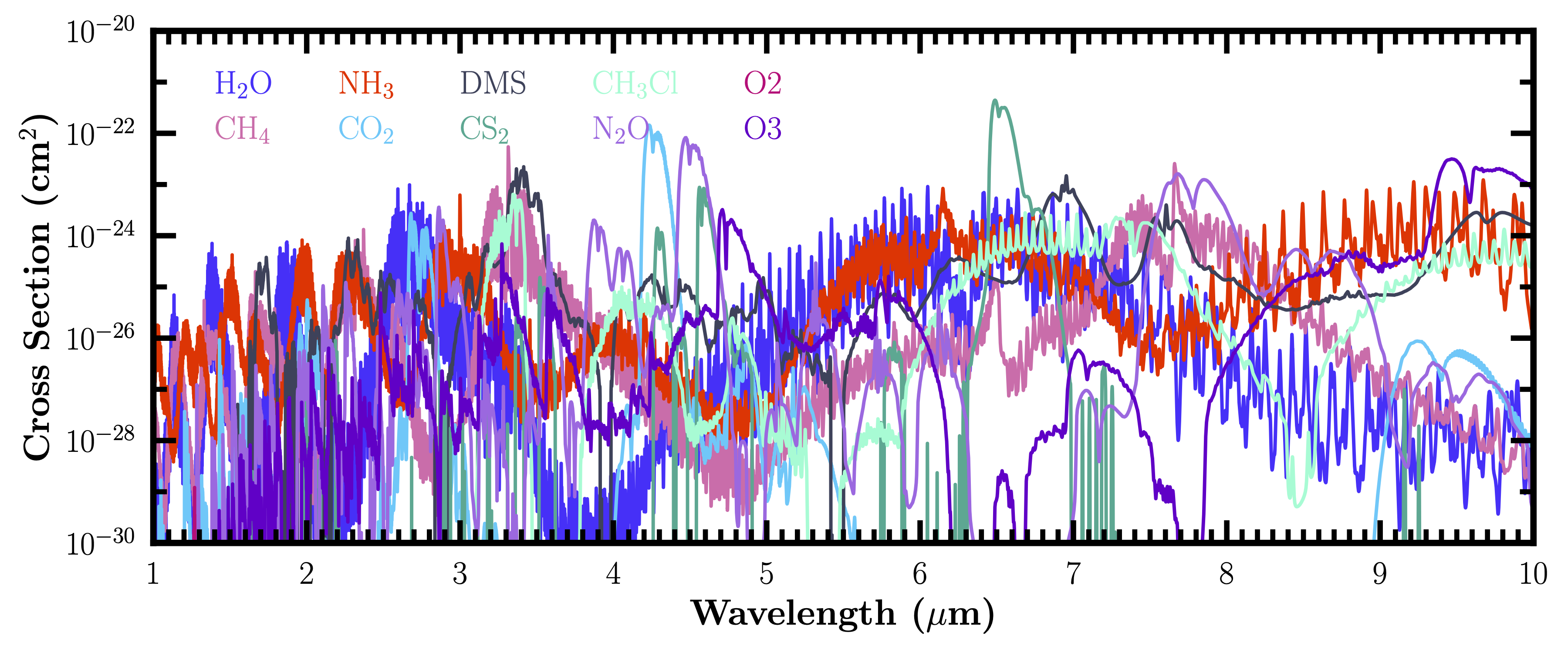
Fig. 4.86 Absorption cross-sections for a number of proposed biomarker molecules (Madhusudhan 2025). Their spectral prominence is ultimately the result of both their cross-sections and their abundances.#
We now consider how a biomarker may be detected via transmission spectroscopy, presently the most achievable pathway. As noted above, the planet properties themselves affect the atmospheric signal, with hotter atmospheres dominated by lighter molecules like H\(_2\) producing larger absorption features. However, habitable planets will inevitably have colder (\(\lesssim 300K\)) atmospheres, while Earth-like planets will also have heavier N\(_2\)-dominated atmospheres. The transmission spectrum of Earth consists of absorption features at a ppm level.
Beyond the size of the atmosphere itself, any chemical species must absorb a significant amount of starlight for it to be detectable. The degree by which a molecule can absorb radiation is quantified by its absorption cross section. Figure Fig. 4.86 shows the absorption cross-sections for a number of proposed biosignature gases. Prominent peaks in cross-section can be used to recognise each species and are often referred to as “absorption features”. Ultimately the atmospheric opacity presented by a species in an atmosphere is a product of its absorption cross section, i.e. how well it absorbs at a given wavelength and its number density, i.e. how many molecules are present.
An atmosphere contains a large number of chemical species, each contributing different amounts of atmospheric opacity at different wavelengths. A detectable biosignature gas must therefore have sufficiently strong absorption features and be present in sufficient quantities to dominate over other absorbers in the atmosphere. This therefore is the reason behind two of the three criteria for an ideal biosignature gas as discussed in the previous lecture. The viability of secondary biosignature gases, which are not expected to be present in as high abundances as primary biosignature gases, is because many have absorption cross sections that are large enough to more than compensate for their lower abundances.
Expanding the Search for Life#
As established above, detecting an Earth-like exoplanet, let alone detecting biosignature gas in its atmosphere, is an immense challenge that is not achievable with today’s facilities. However, life on Earth thrives in a variety of environments beyond that occupied by humans, ranging from methanogens in H\(_2\)-rich environments kilometres deep into the Earth to extremophiles at high-temperature deep-sea vents. It is therefore possible that life may survive in equivalent conditions on planets dissimilar to Earth.
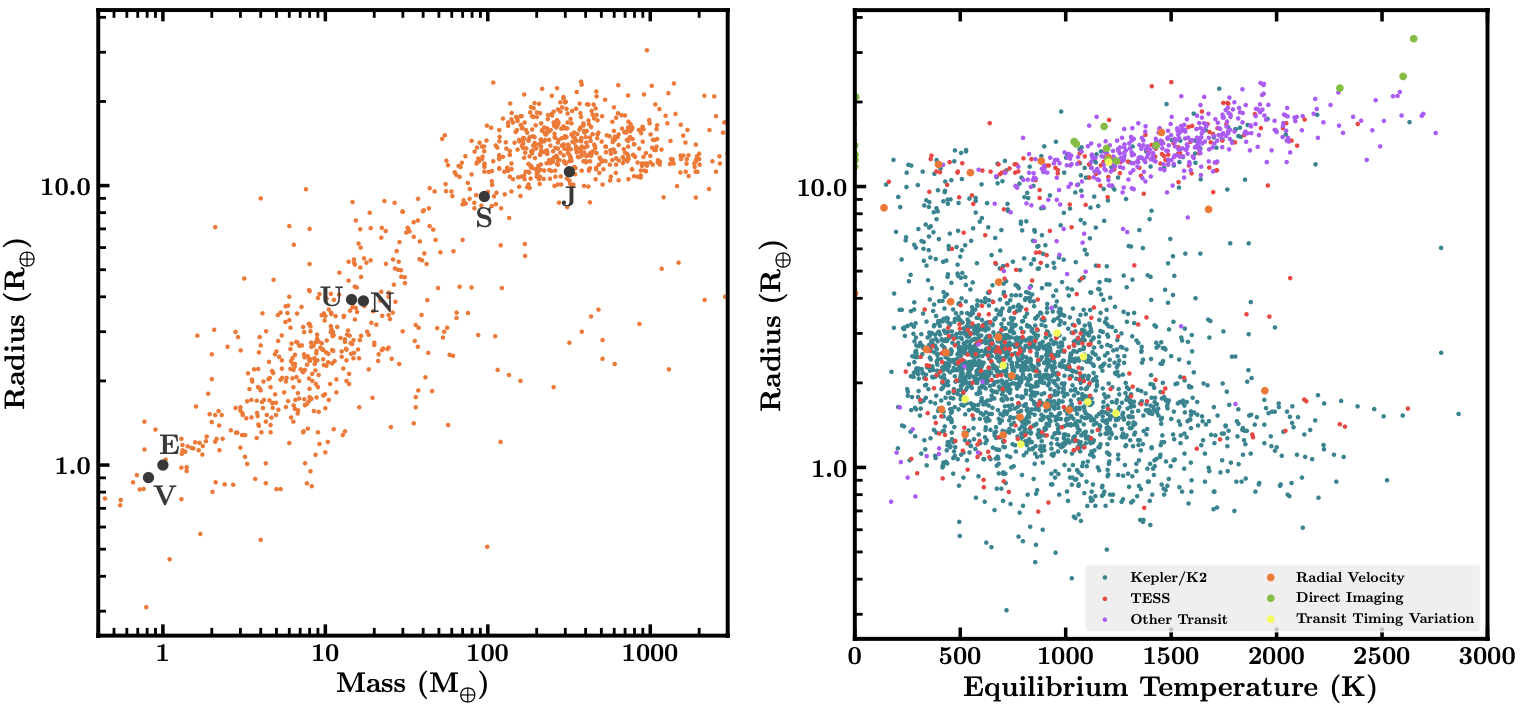
Fig. 4.87 The known exoplanet population. Left: the masses and radii of confirmed exoplanets. Right: radii and equilibrium temperatures of confirmed planets with radius measurements. It can be seen that the exoplanet population does not follow solar system archetypes, with many planets falling between the solar system’s rocky and gas giant planets, collectively dubbed ‘sub-Neptunes’.#
The earliest surprise in the relatively young field of exoplanet discovery is that exoplanets do not generally conform to the classes of planets seen in the solar system, i.e. there is no clear separation into rocky planets, ice giants and gas giants. Indeed most of the known exoplanets to date have sizes between those of Earth and Neptune, defying ready classification. A number of hypotheses have been put forward to explain these sub-Neptune planets. Pontetial explanations include them being miniature versions of Neptune (mini-Neptune) (Rogers & Seager 2013), larger rocky planets (super-Earth)(Valencia 2007), as well as more exotic configurations. Notably, several proposed configurations enable habitable conditions on their surfaces.
Hyceans (Madhusudhan 2021) are a proposed class of planet that can have masses and radii between Earth’s and Neptune’s and host habitable surface conditions. These conditions however are unlike those on Earth’s surface, as hyceans have H\(_2\)-dominated atmospheres and an entirely oceanic surface, with depths of thousands of km that eventually reach high-pressure ices at the bottom. Most importantly for biosignature detectability, the H\(_2\)-dominated atmospheres of hycean planets make them significantly more readily observable with transmission spectroscopy.
An archetypal hycean candidate planet is K2-18b (Montet 2015, Cloutier 2017), whose transmission spectrum was already presented above. Notably, this spectrum led to the first ever detections of CH\(_4\) and CO\(_2\) in a habitable zone atmosphere. Moreover, a keen observer will note that among the labelled absorption features at the bottom of the figure is DMS i.e. dimethyl sulfide, which was discussed last time as being a robust biosignature gas. This detection however is highly tentative and more observations are needed to robustly determine whether DMS is indeed present. These observations are currently underway.
Proposed Future Facilities#
While the arrival of JWST has revolutionised the study of transiting temperate sub-Neptunes, transiting Earth-analogues still constitute a significant challenge. Moreover, the architecture and sensitivity of JWST mean it is primarily suited to probe transiting planets, which make up a small fraction of the total planet population. As such, proposed future missions aim to address both problems.
NASA’s proposed successor to JWST is the Habitable Worlds Observatory (HWO). Figure Fig. 4.88 shows a render of how it could possibly look. Rather than relying on measuring the spectrum of a planet’s atmosphere as it passes in front or behind its host star, HWO seeks to perform direct imaging: obtaining an image and spectrum of a planet directly. This requires immense sensitivity and angular resolution, and the ability to not be overwhelmed by the significantly brighter host star.
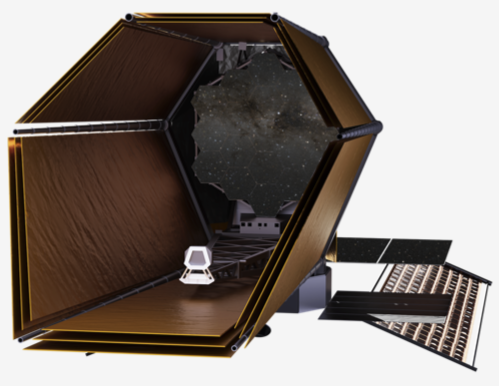
Fig. 4.88 A render of one possible architecture for the Habitable Worlds Observatory (NASA).#
Another proposed observatory is the strategically named Large Interferometer For Exoplanets (LIFE), which is comprised of a formation of telescopes carrying out nulling interferometry. This is a technique to directly measure the emission spectra of exoplanets like HWO without relying on them transiting in front of the host star.
The expected timeline for the above two missions would be on the order of a few decades.
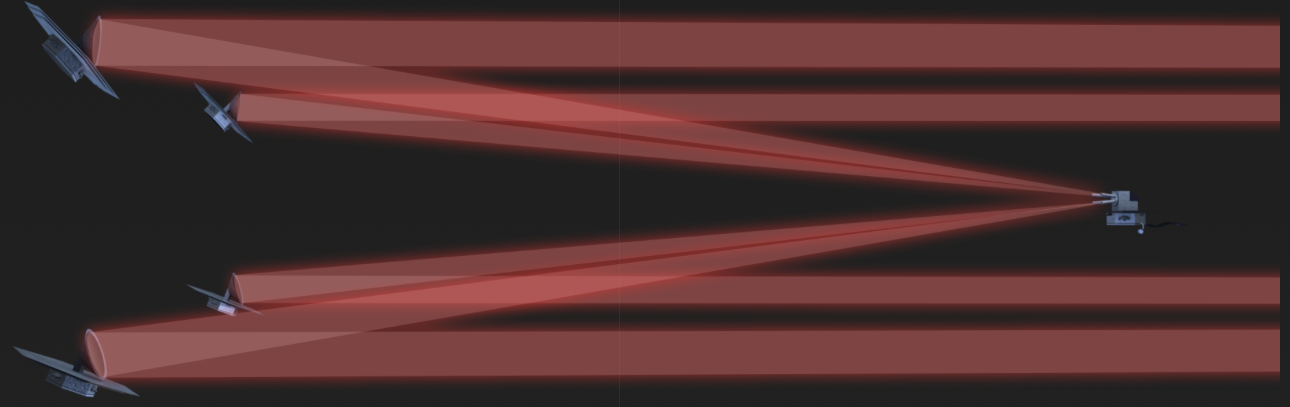
Fig. 4.89 A schematic representation of how LIFE will carry out observations (LIFE Collaboration).#
Concluding Remarks#
Since the discovery of the first planet beyond the solar system three decades ago, the search for life has gone from speculative fiction to a feasible reality. The breakneck pace of progress since then, both theoretical and observational, has brought us to the stage where the first indication that we are not alone in the universe can come within our lifetimes, be it in months, years or a few decades.