Origin of Habitable Environments (C2)#
Module leader: Oliver Shorttle (IoA, Department of Earth Sciences)
Learning objectives from the C2 module:
Understand how the rock record is our archive of Earth history.
Recognise the basic limitations of reconstructing the past from any planet’s rock record.
Be aware of major Earth-system transitions that have occurred, recorded in the rock record, and what has contributed to these.
Be familiar with the habitable zone concept and its application in the solar system and beyond.
Recognise the limitations of the habitable zone concept when considering the climate history.
This lecture introduces you to the C2 module ‘Origin of habitable environments’. We will look at some foundational concepts for this part of the course, focussing on how planets’ record their histories, and the major insights the solar system gives us about what makes a habitable planet.
How C2 links to the course’s major questions#
A major question we ask in this course is: Is there life elsewhere in the Universe?
We have seen during the introduction to the course that we can break this down into at least two separate questions, that get a bit closer to the research questions we might like to undertake. With the core courses we are getting into some of the disciplinary specifics of how these questions relate to what we understand, and what we do not understand, about the physical, chemical, and biological sciences underpinning these questions. We can therefore reduce these questions down further here, to questions rooted in the history of the Earth, its biosphere, and the solar system planets; questions relevant to what we will learn in C2:
How did life emerge on Earth? |
How do we find life elsewhere? |
|---|---|
How did life persist on Earth? |
What is the history of life on Earth? |
What made and maintained Earth’s habitability? |
How does life modify a planet? |
Why do Venus and Mars \(\neq\) Earth? |
What can a lifeless world look like? |
C2 will touch on these questions from an Earth Sciences perspective. In this introduction lecture we look at three foundational concepts that will help you engage with the following lectures.
The Geological record#
Earth’s history as a habitable and inhabited planet needs to be reconstructed from its rocks. At the present day we can investigate processes from the edge of Earth’s magnetosphere to oscillations of its inner core, but without the rock record we can only speculate about how these might have operated in the past.
How good are rocks at keeping a complete historical record of a planet’s history though? Most fundamentally we might ask if there is rock from the time period we are interested in. Unfortunately though, The rock record is mostly gaps, deposition of sediments is not continuous and leaves periods of time with no presence in the rock record. When these gaps are small we tend to overlook them. When they are very large, and especially if the environment or tectonics have driven change in the meantime, we call the gap an unconformity.
These gaps in the rock record get worse the further back in time you look (Fig. 1.11). What’s more, older rocks have frequently seen higher temperatures and more deformation: they are less well ‘preserved’. This affects the amount of information that can be obtained from them.
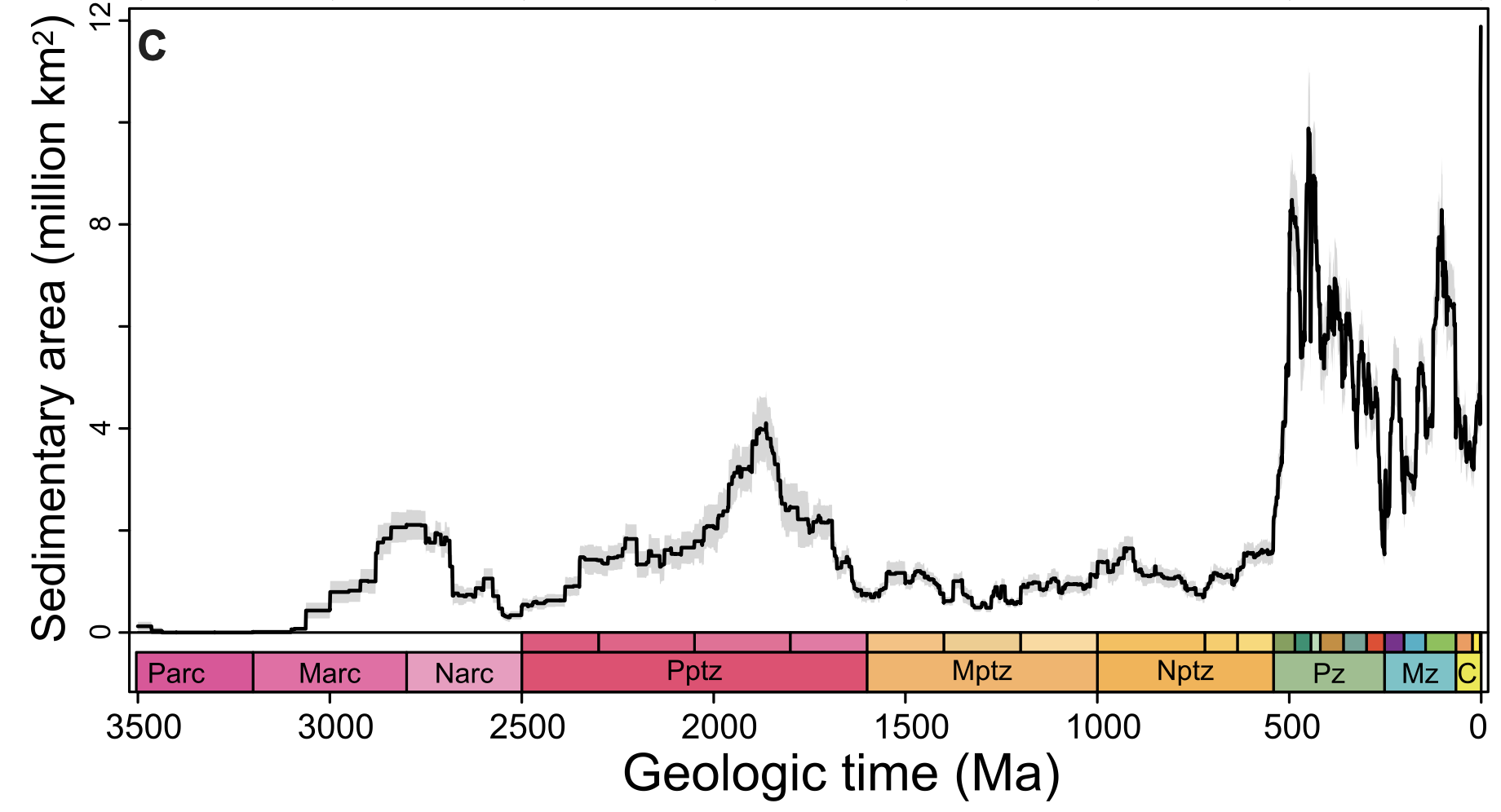
Fig. 1.11 An estimate of the surviving rock area in North America as a function of time. Rock Area diminishes dramatically in the pre-Cambrian. Modified from Peters+2021.#
Eventually, the geological event horizon is reached, beyond which we have no information. Some of the oldest rocks on Earth are gneisses, highly metamorphosed rocks that were originally igneous, i.e., magmas, dating from nearly 4 Ga.
Despite all these challenges to reconstructing geological time and Earth’s past, we have a remarkably complete picture of the major transitions in Earth history. This body of knowledge, produced by huge amounts of fieldwork, is summarised in the geological timescale (Fig. 1.12).
The Geological timescale of Earth gets broken up into numerous blocks of time, which towards the present get extremely numerous! There is no expectation that you know these fine divisions, it is probably useful to be familiar with the Eon-level names that form the largest divisions of time, which from present to past are ‘Phanerozoic’, ‘Proterozoic’, ‘Archean’, and ‘Hadean’.
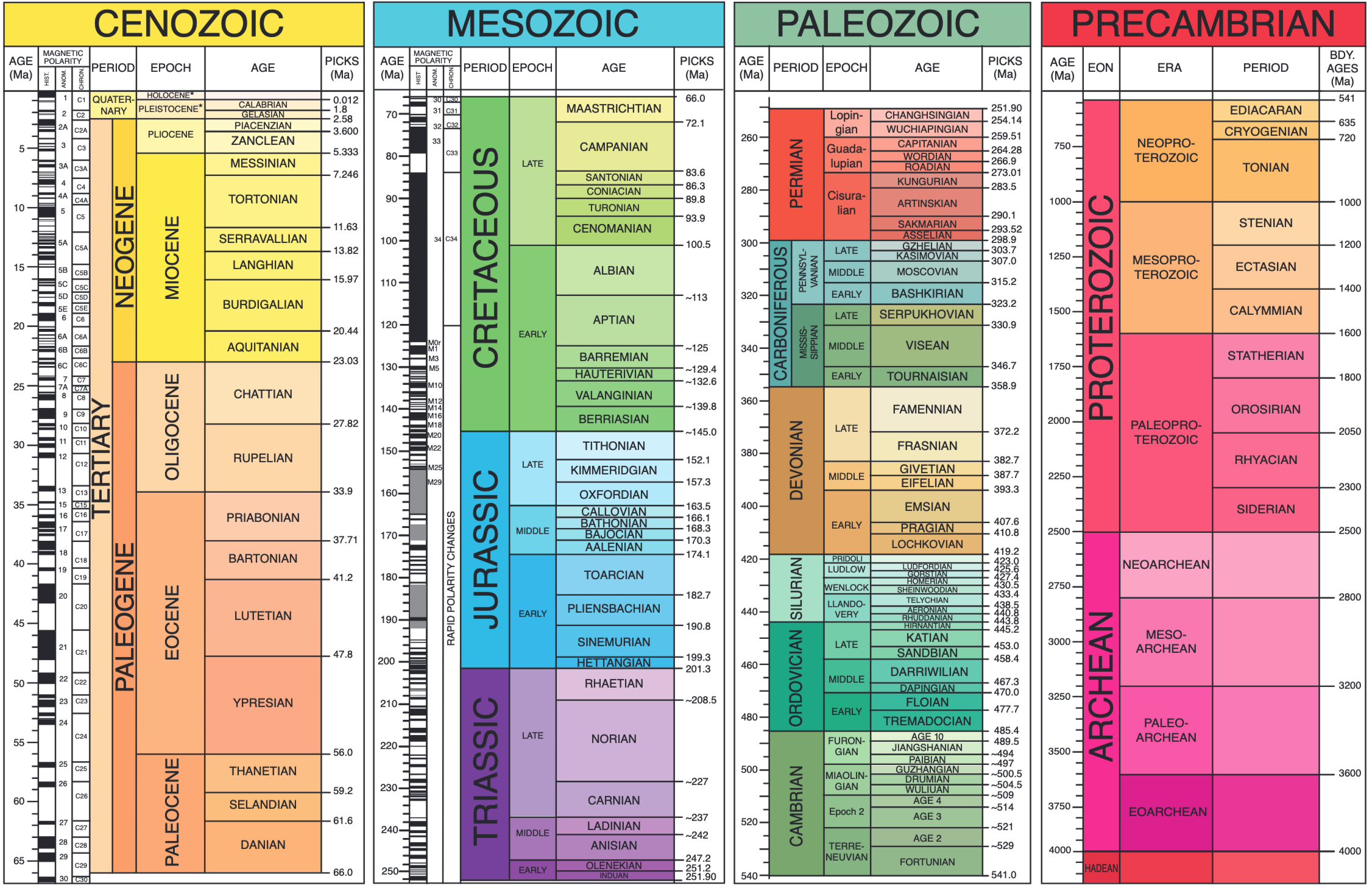
Fig. 1.12 Earth’s geological timescale. Credit and higher resolution version: Walker, J.D., and Geissman, J.W., compilers, 2022, Geologic Time Scale v. 6.0: Geological Society of America.#
We will look at how we can access information on the geological past below, organised into windows of time according to the record that is available to us. Note that these do not correspond to the formal division of time you can see in Fig. 1.12.
0–200 Ma#
Over this period of time the geological record is rich with information we can access on past climate. For the last roughly one million years we have the ice core archive of trapped gasses and water; preserved on Antarctica. We also have a nearly continuous sedimentary record, preserved beautifully on the seafloor: after its formation at a mid-ocean ridge, ocean crust passively moves away as the plates pull apart. Beneath more than 2 kilometers of ocean, this crust gets covered by sediments raining out of the water.
Eventually however, ocean crust experiences subduction, being thrust back into Earth’s mantle. The oldest seafloor is approximately 200 Ma (Fig. 1.13), so our record of largely undeformed sediments (not yet even turned into rock), stops here.
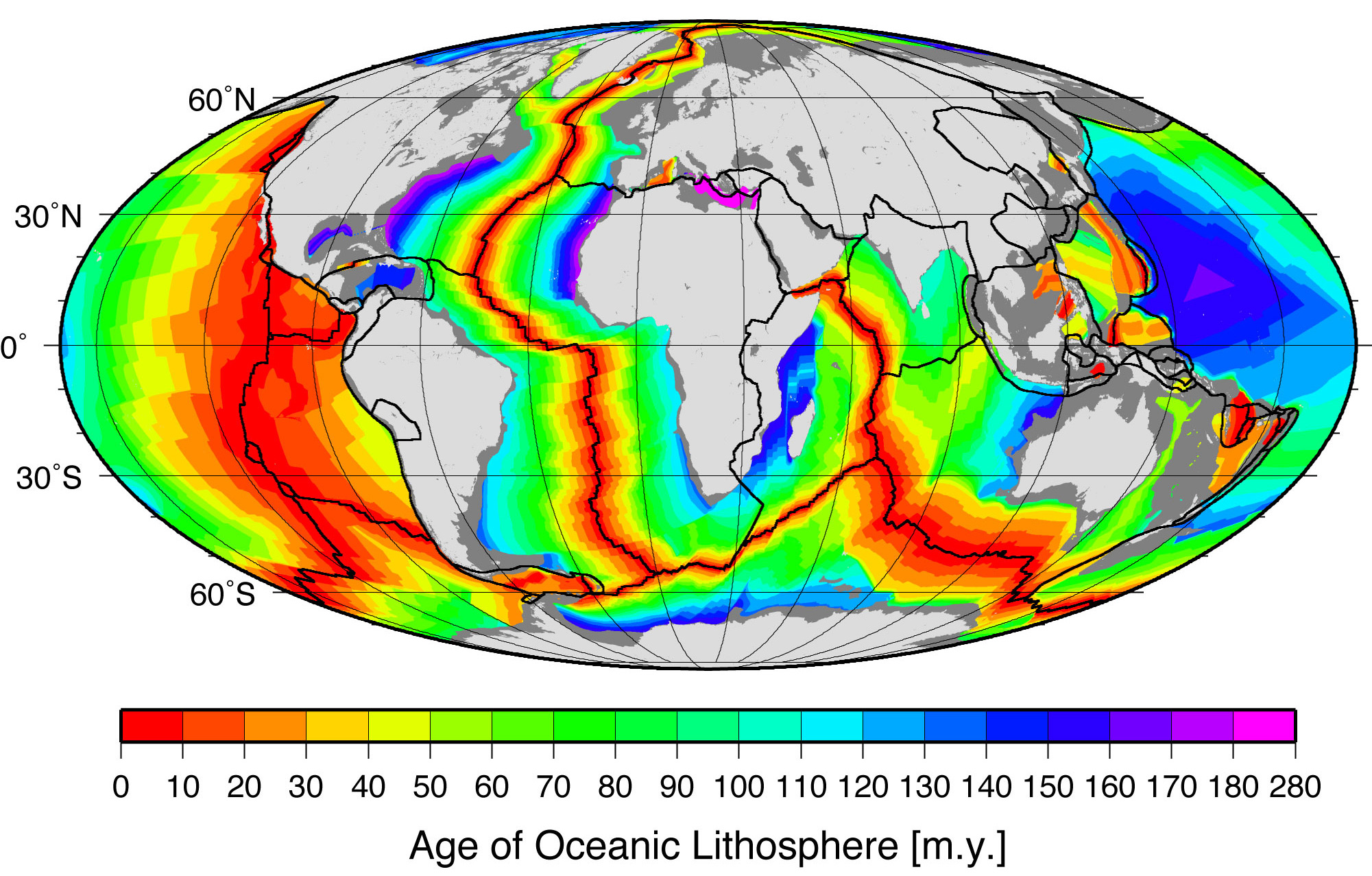
Fig. 1.13 A map of Earth’s seafloor age. From Müller+2008.#
200–540 Ma#
Over this period of time animal life proliferated across the Earth. Approximately 400 Ma, the first plants colonised the continents, opening up vast new habitats to be exploited by the animals that followed them onto land. Now, land plants constitute a majority of Earth’s biomass.
The geological record is richly divided up over this period, as you can see from Fig. 1.12. This is made possible by the presence of well preserved fossils in rocks since 540 Ma. The innovation that made this possible was bio-mineralisation: life’s use of minerals such as calcium carbonate to make hard parts for itself. These hard parts hugely increase the potential for a dead organism to be preserved when it enters sediments, compared with its soft organic matter. As a result, geological time has been divided up on the basis of when fossil organisms (their hard parts generally) come and go from the record. Ultimately, it is evolution (and extinction) that is acting as the primary geological clock over the Phanerozoic.
540–3800 Ma#
We have now entered the vast pre-Cambrian. This is the time before animals had started exploiting mineralisation to create hard parts, with the result that our best tracer of time passing in the rock record is, mostly, lost to us. In this window of time fossils are much more rare and, eventually, disappear almost entirely as we are in a world of single celled life.
However, a profound change occurred on Earth during this time. Oxygenic photosynthesizing bacteria, cyanobacteria, began producing enough oxygen to overwhelm the reducing power of the Earth’s interior – which is continuously being imposed on its surface environment through volcanism (see Sleep’s ‘Dioxygen over geological time’ to understand more about the geological oxygen cycle).
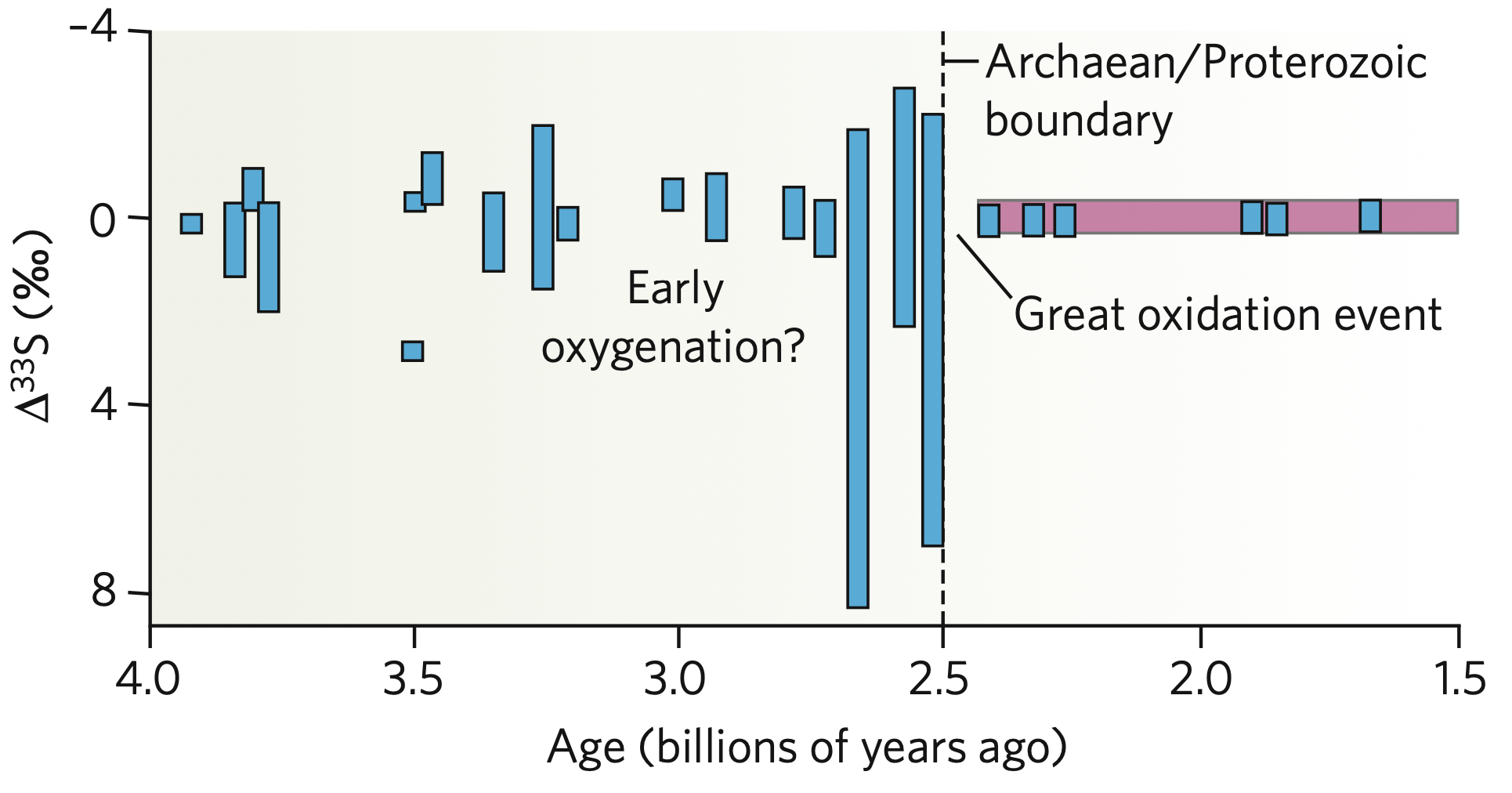
Fig. 1.14 Various features of the geological record evidence the rise of atmospheric oxygen in the Archean, but few are as definitive as the isotope fractionation of S that is observed in Archean sediments. The collapse in isotope variability from ~2.4 Ga reflects oxygenation of the atmosphere and the buildup of large volumes of sulfate in the oceans. From Kump (2008).#
This oxygen, a waste project of reducing carbon using the light of the sun, transformed the surface of the planet. Ultimately oxygenic photosynthesis has provided a pervasive source of available energy for heterotrophic organisms such as ourselves. It is important to note though, that whilst we take Earth’s atmospheric oxygen for granted, if biology’s production of \(\text{O}_2\) were turned off, the planet would rapidly revert to a nearly oxygen-free atmosphere – the planet’s vast interior being out of equilibrium with, and more reduced than, the atmosphere.
3800–4400 Ma#
In this time period Earth perhaps looked largely abiotic: life had yet to oxygenate the atmosphere, the continents were free of macrobiota, life in the oceans was at most uni-cellular. In this window our evidence for life peters out altogether. Almost all we have of a geological record on Earth from this time is single crystals of a particularly hard mineral, zircon, from which to reconstruct all Earth processes. Clearly, what can be directly constrained from this is very limited.
Earth’s paucity of rock record this far back in time stems from it having been geologically active for its entire history. This geological activity has resulted in rocks being eroded from the continents, ocean crust being subducted, and even the rocks that remain being repeatedly heated and deformed. The earliest era of Earth history, the ‘Hadean’, starting ~4 Ga is really defined by the absence of geological record more than the presence of marker horizons in the rock record that has divided up younger portions of Earth history.
The beginning#
To go back further in Earth history requires some extrapolation. One place we can look is Mars, which has a more ancient surface, having been geologically active for less of its history. Martian geology provides a window into processes happening in the early solar system, when we only have small remnants of rock record on Earth. However, despite successive rover missions to Mars, its geological history remains relatively unexplored, and unresolved, compared to that of Earth’s (consequently the martian timeline is only broadly divided Fig. 1.15). There is also a question of what common processes the terrestrial planets would have experienced at this time – one link is impact bombardment, there may be others.

Fig. 1.15 The geological timescale of mars in the reference frame of Earth’s Eons. Compare with the detailed division of time made possible for the Earth from the advent of life Fig. 1.12. Adapted from Wordsworth (2016).#
Another source of information is the Moon. The Moon also has an ancient surface, having cooled and ceased major geological activity early in the solar system’s history. More importantly, Earth’s early history must have been defined by an event forming the Moon. This is commonly believed to have been a giant impact, essentially guaranteeing that Earth will have began hot, probably as a magma ocean (Fig. 1.16). Such destructive and high-energy beginnings are inherently not directly recorded in the rock record, instead we need to search for indirect evidence of how they operated and what might be the consequences for creating habitable environments.
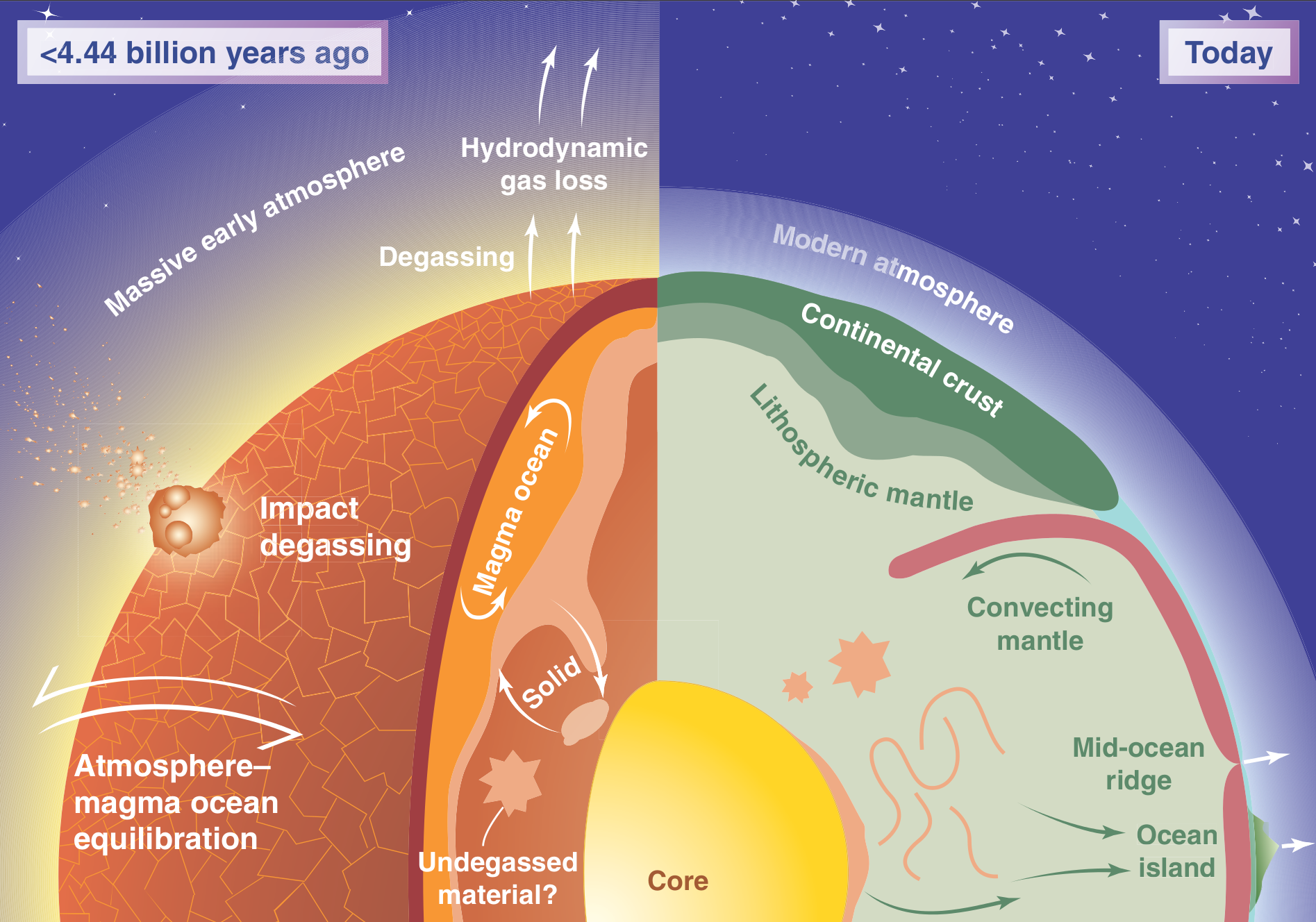
Fig. 1.16 A schematic of the transitions Earth went through in its first 100 Myr. From Ballentine (2002).#
The habitable zone#
The terrestrial planets of our solar system are illustrative of what might be a wider phenomenon: planets too close to their star will be too hot to sustain liquid water (Venus), those to far away will be too cold (Mars), and only those in a hospitable middle ground (Earth) will be able to sustain liquid water. This idea that there is a zone around a star where climate stability can be maintained is captured by the habitable zone concept. Although Venus, Earth, and Mars clearly differ in more than just their instellation, they present a compelling case for climate fragility in the face of internal (e.g., planetary mass), or external (solar radiation) forces.
In a now famous paper, Kasting et al. (1993) formalised the habitable zone concept. The fundamental principle is that planets with water at their surface have a mechanism to control their temperatures by regulating the greenhouse gas content of their atmospheres, specifically, their \(\text{CO}_2\) content. On Earth, this mechanism operates by the ‘carbonate silicate’ cycle, with the schematic reaction
The effect of this reaction is to draw CO\(_2\) out of the atmosphere by reacting it with rocks, producing a new rock, calcium carbonate, and silica. Critically, this reaction is posited to be temperature sensitive, so that the hotter the planet gets, the faster this reaction removes CO\(_2\) from its atmosphere.
Huge debate has occurred around the efficacy of the carbonate-silicate cycle on Earth, and what its implications are for maintaining planetary habitability. This debate is something you may choose to look into, but despite the discussion, the ability to demarcate a region of space within which discovered planets might be able to host liquid water (e.g., Fig. 1.17) has proved an powerful guiding concept in our search for life elsewhere. This is therefore one of those topics that cuts across the Earth, planetary and exoplanetary sciences, requiring insight and observations from all communities.
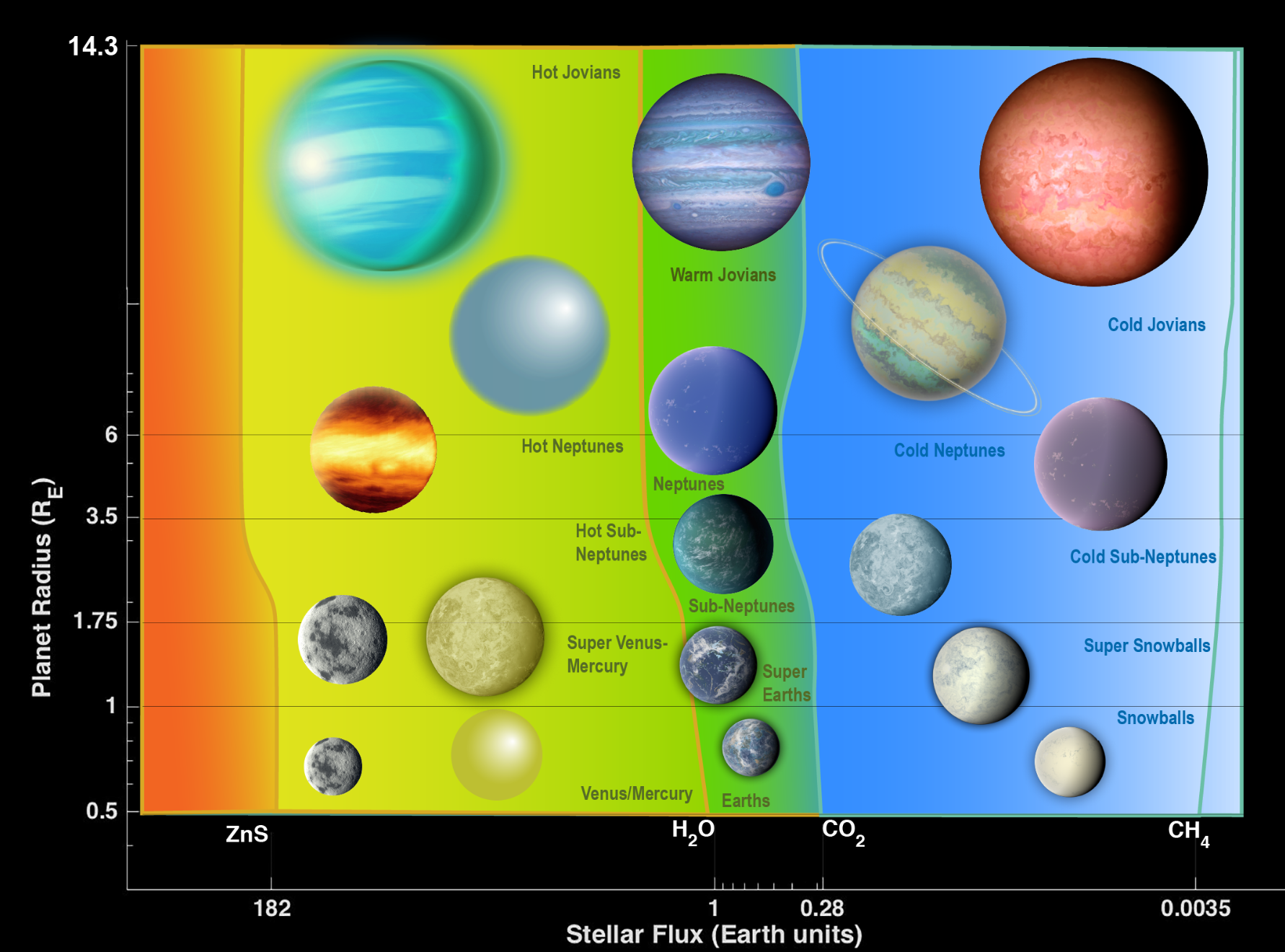
Fig. 1.17 A somewhat unconventional representation of the habitable zone around stars, according to the instellation flux (horizontal axis) and planet radius. This representation is useful for illustrating the planetary regimes that may exist across this space, according to the size of planets and how heated they are by their host star. From Kopparapu+2019, in which a more conventional presentation of this is given in their figure 2.#
The C2 lectures#
The C2 lectures focus on developing an understanding of the key processes that shape planetary habitability. You will look at how climate homeostasis has been achieved on Earth, the tectonic underpinning climate regulation and the planet’s wider habitability, and then move on to the solar system planets as key case studies of more inhospitable worlds. A nice visual summary of all these interacting phenomena was provided by Ehlman+2016, Fig. 1.18.
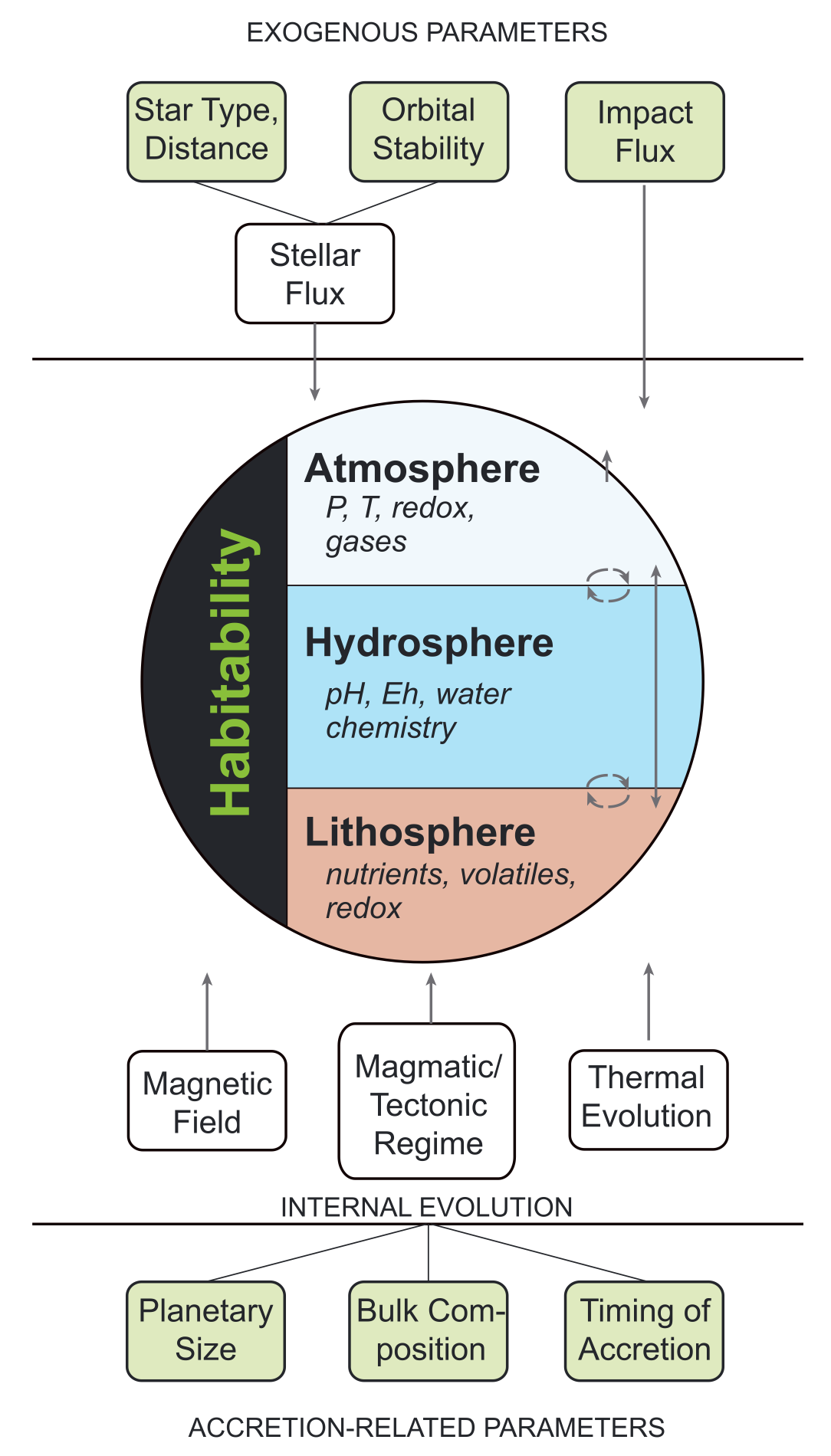
Fig. 1.18 A summary of how interacting factors, from planetary environment, planet formation history, and its internal processes affect planetary habitability. From Ehlman+2016.#