4.10. The Origins of Life as a Planetary Phenomenon#
Lecturer: Paul B Rimmer (Department of Physics, Cavendish Laboratory)
L10: Planetary Astrochemistry
Volatile Delivery from Impacts: Small, Medium and Large
Post-Giant-Impact Atmospheres
Origins of Life Scenarios and Guiding Principles for Prebiotic Chemistry
Cometary Delivery of Volatiles#
In the last lecture, we ended by looking at the similarity of comet chemistry and interstellar chemistry. Now we will look at the prebiotic relevance of this chemistry. This rich interstellar chemistry is known to participate in reactions that can result in the building blocks of life. We’ll talk about what that means near the end of this lecture, but for now, it’s just important to note that nitriles, like hydrogen cyanide (HCN) are feedstock molecules for prebiotic chemistry. Can HCN and other, more fragile, molecules, survive the journey to Earth’s surface, including the violent impact on that surface? Maybe some can, if the impact angle is shallow enough, and the molecules are deep enough in the comet. Most impacts annihilate all cometary chemistry, as faras we can tell.
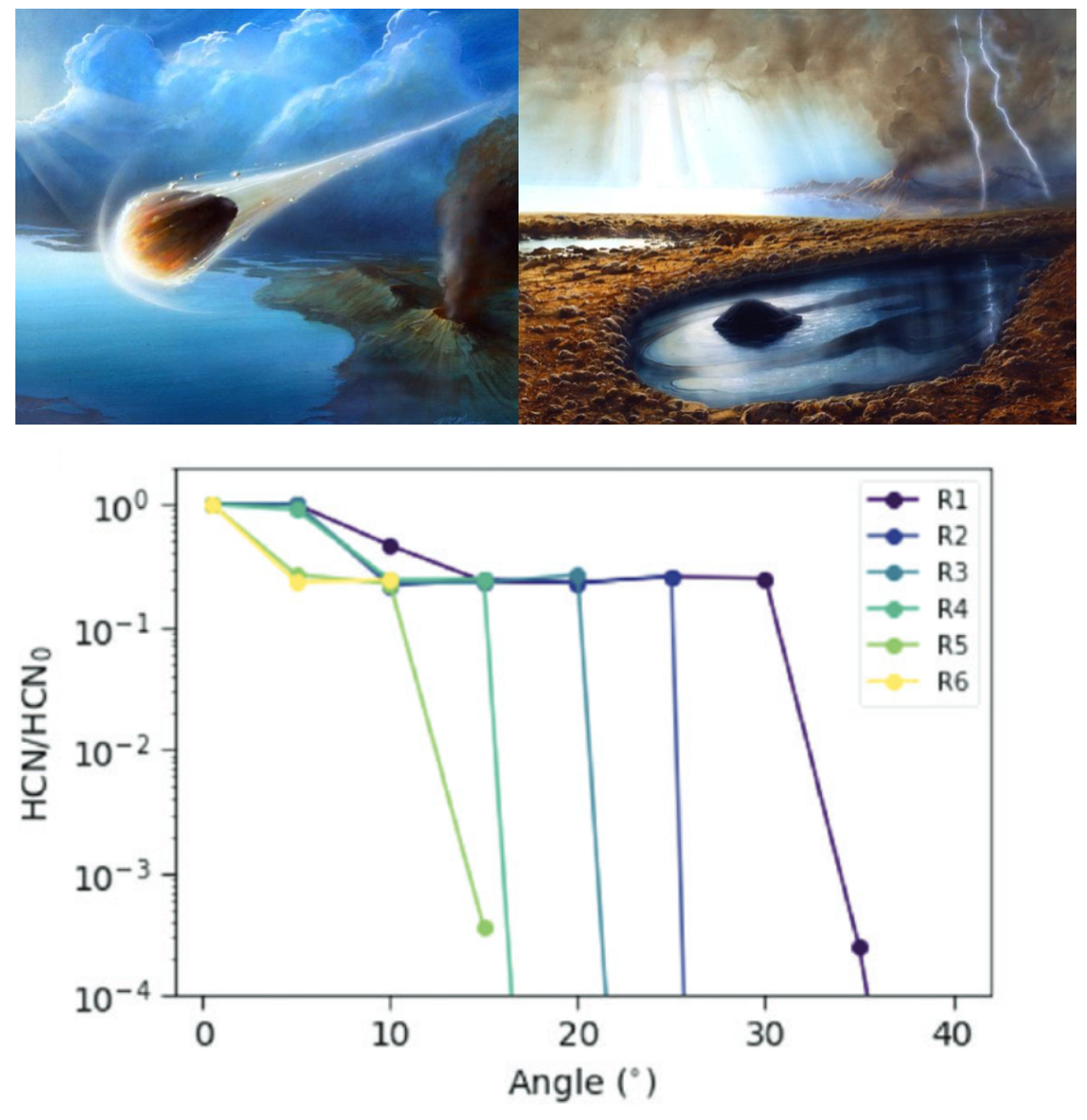
Fig. 4.75 Cometary Delivery of Volatiles: A comparison between the imagined soft cometary impact (from Clark & Kolb 2018) and the physically-grounded reality (from Todd & Öberg 2020).#
Though it looks more likely that little or nothing of prebiotic relevance survives cometary impacts, this is still an ongoing area of research, and the conclusions here are likely to be revised on the basis of future work.
Delivery of Volatiles by Interplanetary Dust#
Comets hit hard, but smaller objects, like micrometer-scale interplanetary dust, is much more likely to arrive on Earth’s surface intact. Though the dust is small, and so doesn’t bring much material of prebiotic relevance per-grain, there are clever ways of potentially concentrating interplanetary dust material. The heavier elements delivered in the dust make the grains dark, and so if they land on ice, their high albedo can lead to ice melting, and concentration of the dust material from multiple grains in little wells.
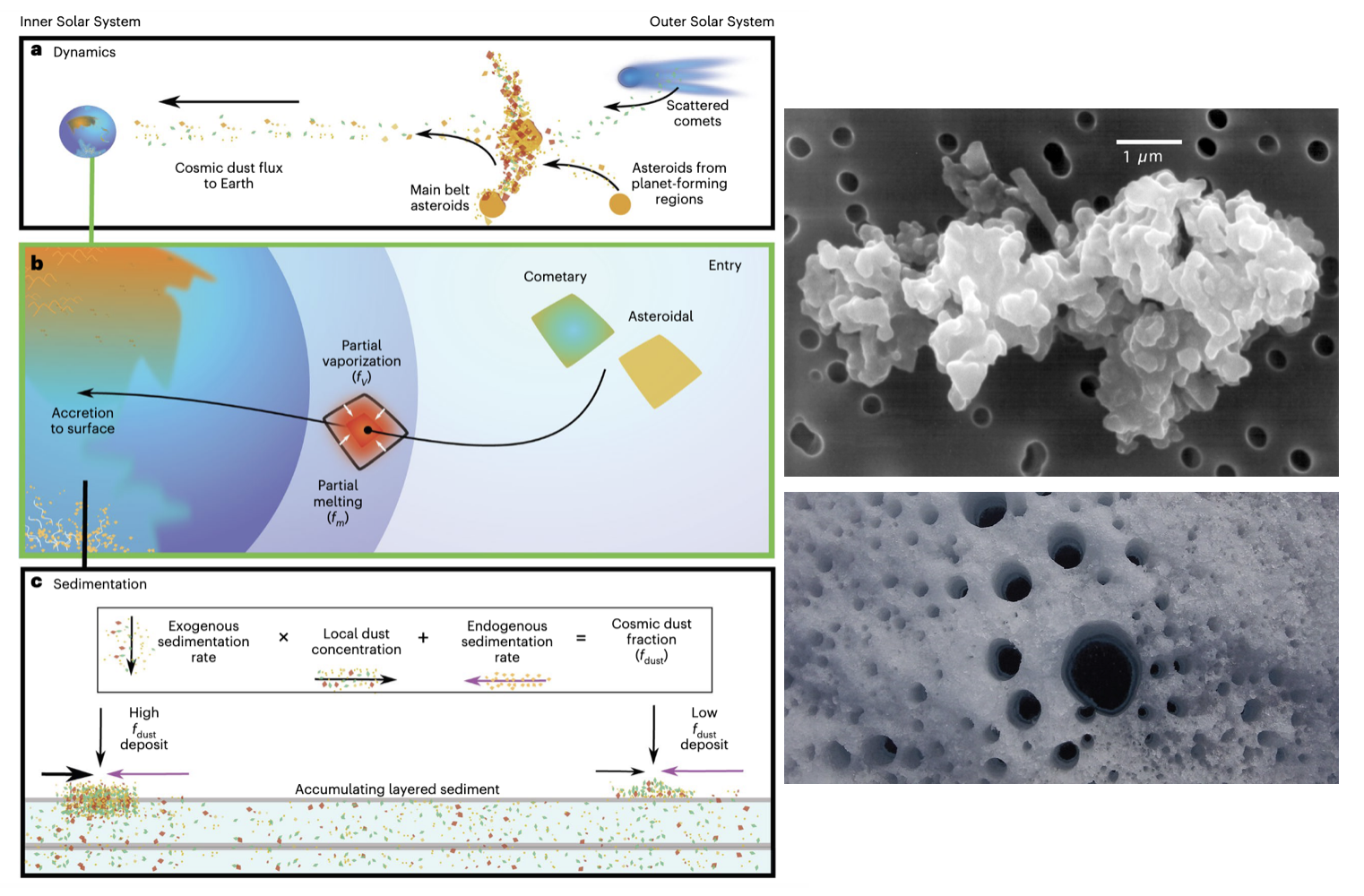
Fig. 4.76 Delivery of Volatiles via Interplanetary Dust: An illustration showing, by calculation, that roughly 50% of interplanetary dust grains arrive on Earth’s surface intact, along with photographs of what happens when this material ends up on pristine long-lived ice, how it can lead to little pockets of melted material. From Walton et al. (2024).#
This is also an ongoing area of research, especially on the topic of what material interplanetary dust really brings, and what would happen to it in these cold glacial environments.
Giant Impacts and Transient Reducing Atmospheres#
Since delivery of small material seems to provide more useful material than comet-sized material, at least on average, it would seem even worse to look at the very big impactors. But larger impactors, especially differentiated impactors that have iron cores, can do something different when they collide. True, the volatile material they bring may not contribute all that much globally, but the iron they take with them can interact with ocean water to transform the planet’s atmosphere into a hydrogen-rich atmosphere. This atmosphere would survive for as long as it takes the hydrogen to escape. This interaction and subsequent atmosphere was first proposed by Genda et al. (2017), with the atmospheric chemistry calculated in detail by Zahnle et al. (2020) and Wogan et al. (2023), and the interaction of the atmosphere and the magma ocean surface was worked out by Itcovitz et al. (2022).
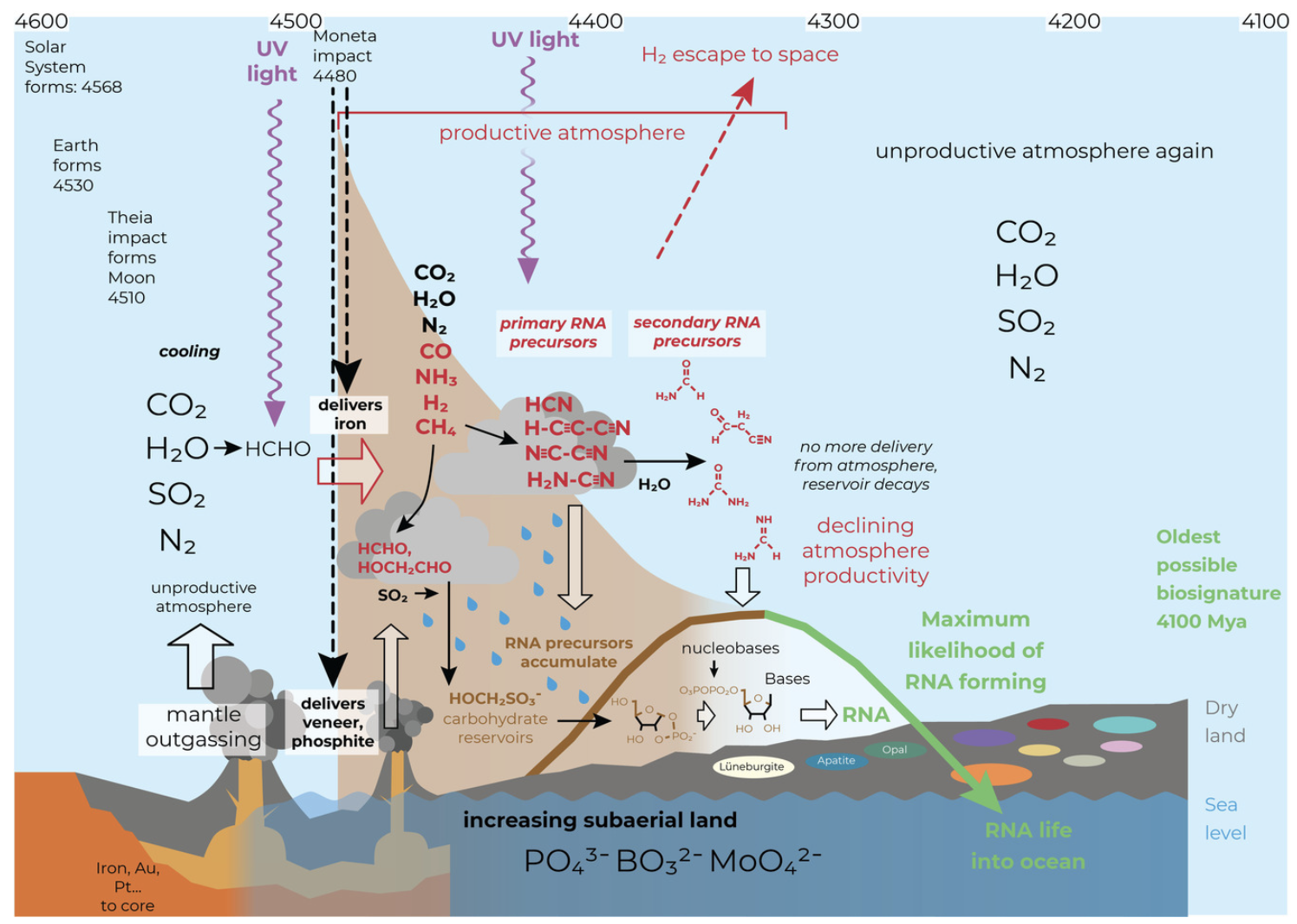
Fig. 4.77 Transient Post-Impact Atmosphere: These post-impact atmospheres are of great interest for prebiotic chemists, for reasons we will soon discuss. Here’s a cartoon of how the atmosphere could change over time in prebiotically relevant ways, from Benner et al. (2020).#
As with the previous discussions, this area also is one of current active work, and many of the conclusions here, even the entire existence of this hydrogen-rich atmosphere, is up for grabs. Upcoming results may well challenge theprobabilities of delivering the iron to the water where it can interact, rather than locking the iron away in the impactor, until it drops straight to the core.
From Astrochemistry to Planetary Chemistry to Prebiotic Chemistry#
Setting aside all these questions of delivery, and stepping back for a second: why do prebiotic chemists care about these impacts? Especially the impact that may generate globally reducing atmospheres? What are they looking for?
It turns out reducing environments were the first environments investigated for prebiotic synthesis. Miller’s experiment (Miller 1953) used an atmosphere very much like this post-impact atmosphere (though he had different arguments for why he was using reducing gases). And his experiment was fruitful. It formed amino acids, the building blocks of proteins, macromolecules that, among other things, control the rate constants for reactions within the cells in order to promote and maintain those reactions that lead the cell to make copies of itself.
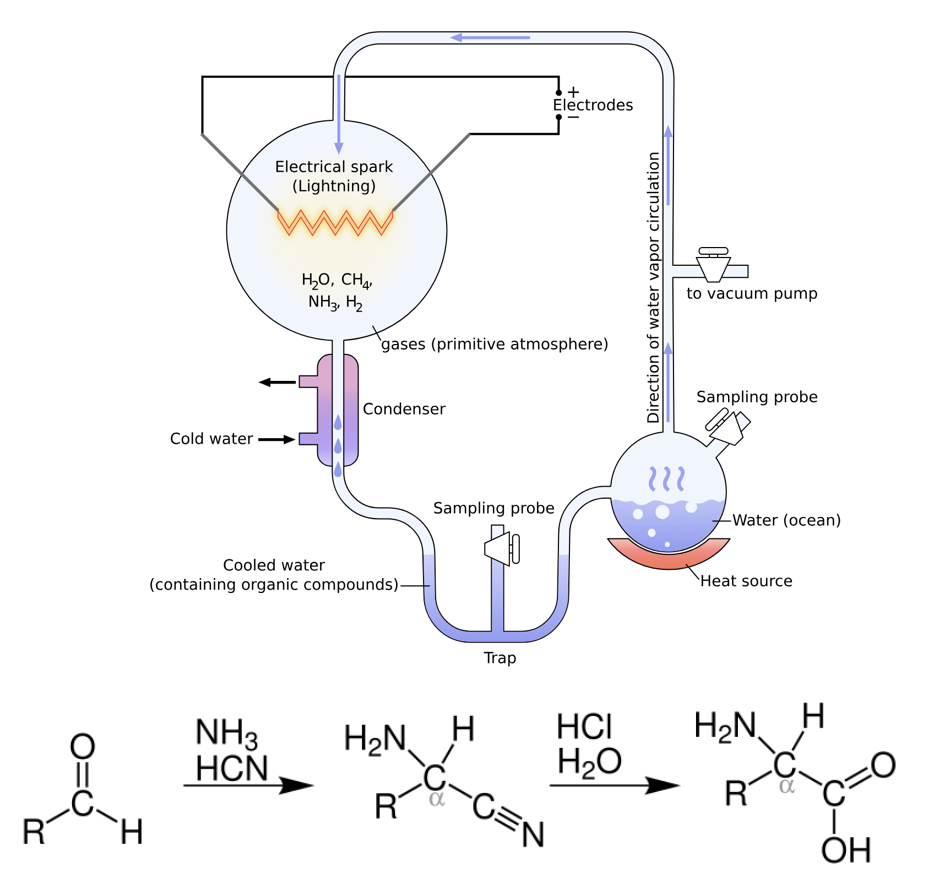
Fig. 4.78 Miller’s Prebiotic Chemistry Experiment and Plausible Mechanism: A picture of the apparatus Miller used, running a discharge through a reducing gas mixture, and forming amino acids. Below is the most probable pathway for this synthesis, revealing why such a mixture is so useful: Strecker synthesis. From Wikicommons.#
The power of reducing environments to result in amino acids, in the case of the Miller experiment, likely involved Strecker synthesis. Here, various high-energy processes would have converted some of the methane and water into aldehydes, such as formaldehyde. The aldehyde reacts with ammonia and HCN to form an aminonitrile (in the case of formaldehyde, aminoacetylnitrile). The aminonitrile can undergo hydrolysis, yielding an amino acid (in the case starting with formaldehyde, aminoacetylnitrile is hydrolyzed to form glycine, the simplest amino acid). There is good indication that this mechanism produced most of the amino acids observed in Miller’s experiment (Miller 1957), though the borosilicate glass itself likely acted as a catylist for some of this synthesis (Criado-Reyes et al. 2021).
Miller’s experiment was not an unqualified success. In addition to needing a special reducing environment to be chemically productive, in that reducing environment, Miller’s experiment produced a mess, a morass of likely tens of thousands if not millions of different compounds. It would be difficult for unguided chemistry to sort through this mess to react into anything life-like.
This is one of Benner’s paradoxes: productive prebiotic chemistry requires reducing conditions, and also the controlled chemistry provided by more neutral conditions. Outside of some specific chemical regimes, this prebiotic synthesis may make trace amounts of desired compounds, but mostly it just makes a bunch of tar (Kim et al. 2016).
One particularly promising scenario starts with hydrogen cyanide, a couple other nitriles, and phosphate, and with ultraviolet light and sulfite or cyanide salts, can convert these nitriles into many of the amino acids life uses, as well as the ribonucleotides (building blocks of RNA, a key molecule for life’s self-replication) and phospholipids (buildign blocks of cell membranes) used by life (Powner et al. 2009, Ritson et al. 2012, Patel et al. 2015).
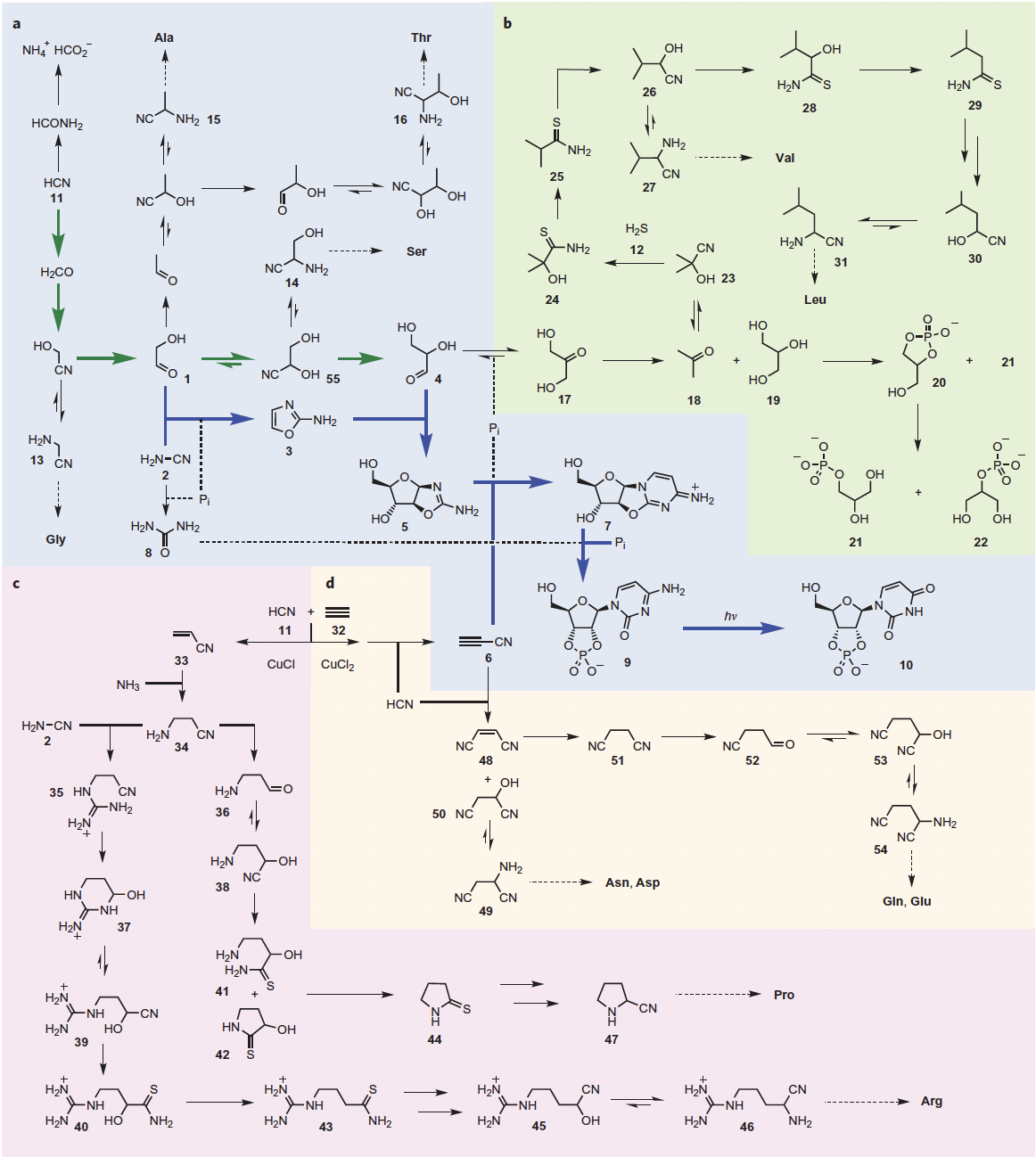
Fig. 4.79 The chemical scheme for the cyanosulfidic scenario: For details, see Patel et al. (2015).#
Since this scenario is connected to starlight, we can constrain where this chemisrty cannot happen based on the ultraviolet spectrum of the star. This is the basis for the work of Ranjan et al. (2017), Rimmer et al. (2018) and Rimmer et al. (2021), and has become a new area of research: prebiotic chemistry on exoplanets (see also Rimmer 2023).
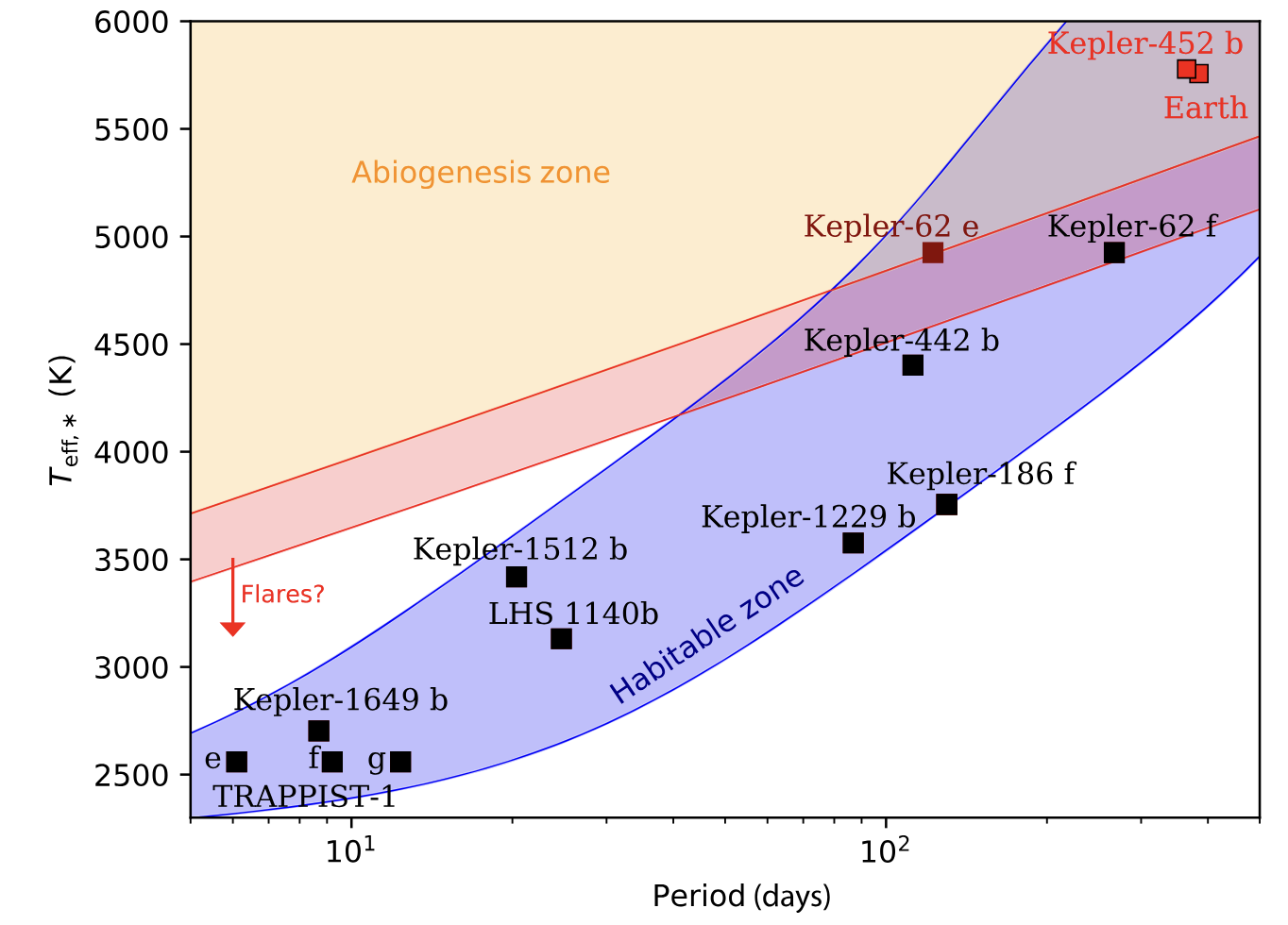
Fig. 4.80 The Abiogenesis Zone: The zone outside of which the above chemistry cannot proceed, based on experimental measurements related to astronomical observations of ultraviolet emissions of the Sun and other stars. From Rimmer et al. (2018).#
A Suite of Origins of Life Scenarios#
The cyanosulfidic scenario is not the only way prebiotic chemistry may have come about. There are many other environments and chemical synthetic proposals out there; this is a problem that is far from a solution. Below are shown some pictures related to several different scenarios, and a list of some environments where people have proposed origins of life took place, along with references for those proposals. The references are far from complete; please look into a few of them to get a start on how prebiotic chemistry may have occurred in any one of these diverse environments.
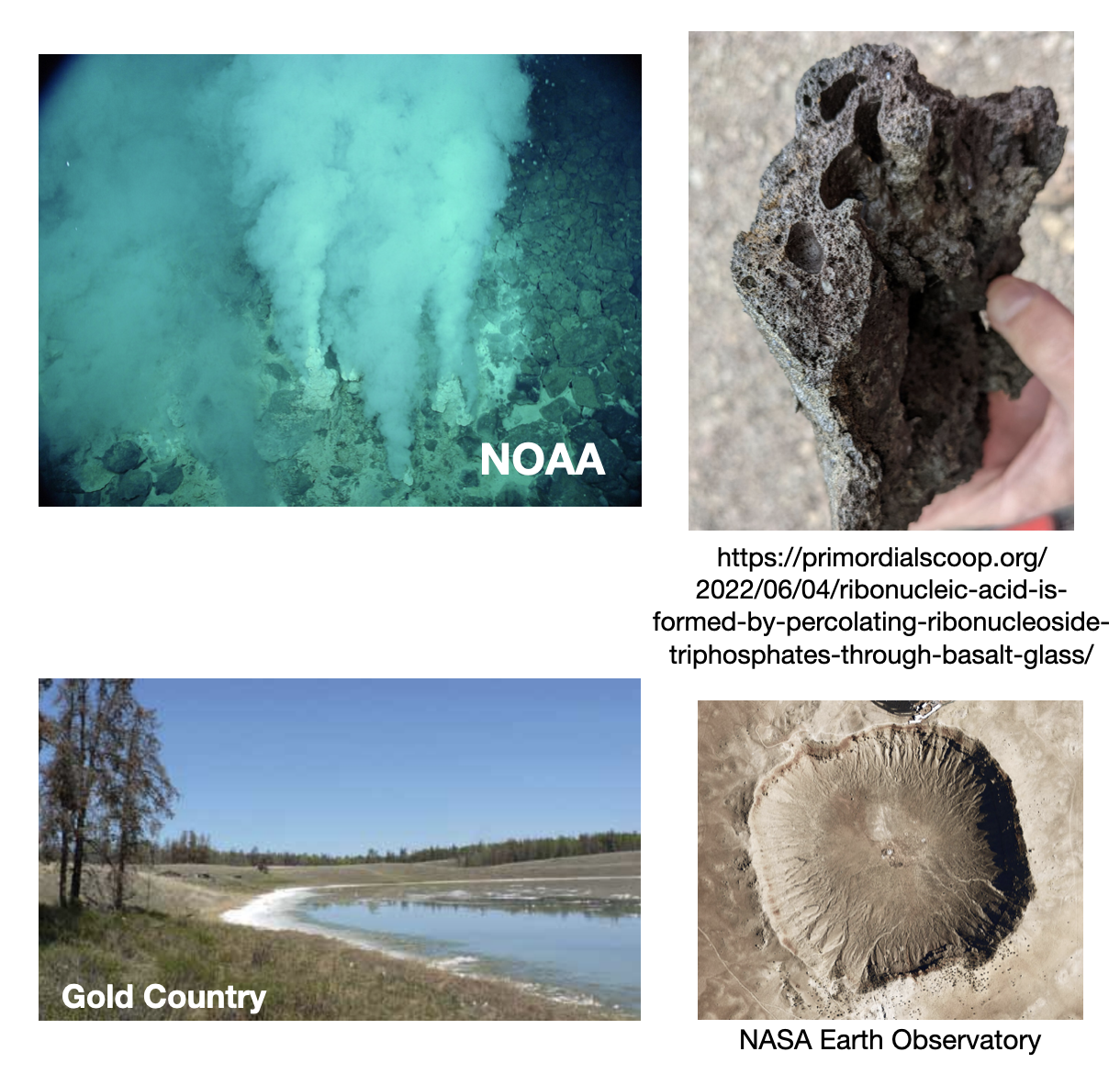
Fig. 4.81 For Example Environments where Life may have Originated: Shown here is the Champaign Alkaline Hydrothermal Vent, a Basaltic Rock, a Phosphate-Rich Alkaline Lake, and an Impact Crator.#
Here is a short and incomplete list of proposed environments for origins of life.
Underwater hydrothermal vents.
Martin et al. 2008. Nature Reviews Microbiology, 6, 805.
Surface hydrothermal vents.
Rimmer & Shorttle 2019. Life, 9, 12.
Rimmer & Shorttle. 2024. Life, 14, 498.
Alkaline lakes.
Toner & Catling 2019. CGA, 260, 124.
Toner & Catling 2020. PNAS, 117, 883.
Underground.
Gold 1992. PNAS 89, 6045.
Sherwood Lollar et al. 2002. Nature, 416, 522.
Basaltic glass.
Jerome et al. 2022. Astrobiology, 22, 629.
Cosmic dust.
Walton et al. 2024. Nature Astronomy, 1.
Giant impacts.
Chyba & Sagan, 1992. Nature, 355, 125.
Ferus et al. 2015. PNAS, 112, 657.
Todd & Öberg, 2020. Astrobiology, 20, 1109.
Anslow et al. 2023. PRS:A, 479, 20230434.
Key guiding principles for Prebiotic Chemistry#
Given we don’t know how life originated or where, are there some guiding principels that we can use for future work in this area? I propose three. Life’s origin will require all of:
“Prebiotically Plausible” Chemistry (Sasselov et al. 2020)
Disequilibrium Chemistry (Pross 2016)
We need a source of energy — Environment-specific? (Walton et al. 2022)
High-Yield Selective Chemistry (White & Rimmer 2025)
Why prebiotically plausible chemistry? The chemistry must have occurred in a natural environment, and so can only have access to the physical and chemical conditions available on that environment. Because there is ignorance about both chemical possibility and environment, the exploration of prebiotic plausibility involves an iterative approach, finding chemistry that works in the lab, finding out where the conditions required for the chemisty occurred in a planetary context, and then including more of the planetary context in the experiment to find out if the chemistry still happens, works even better, or fails to work at all. See Sasselov et al. 2020 and Walton et al. 2022.
Why disequilibrium chemistry? Because life and its molecular constitution is by its nature out of equilibrium. This means an energy source is required. An energy source that is not simply heat. UV light is a good candidate for this energy source (see Pascal et al. 2013).
Why High-Yield Selective Chemistry? The origin of life will not occur as a single chemical step. It will require many chemical steps. If the yield after each chemical step is low, very quickly the resulting chemistry drops below the possibility of detection, and eventually drops to the point where timescales for the desired reaction reach astrochemical timescales. In other words, the chemistry quickly becomes impossible over the time we knew life originated. See the picture below.
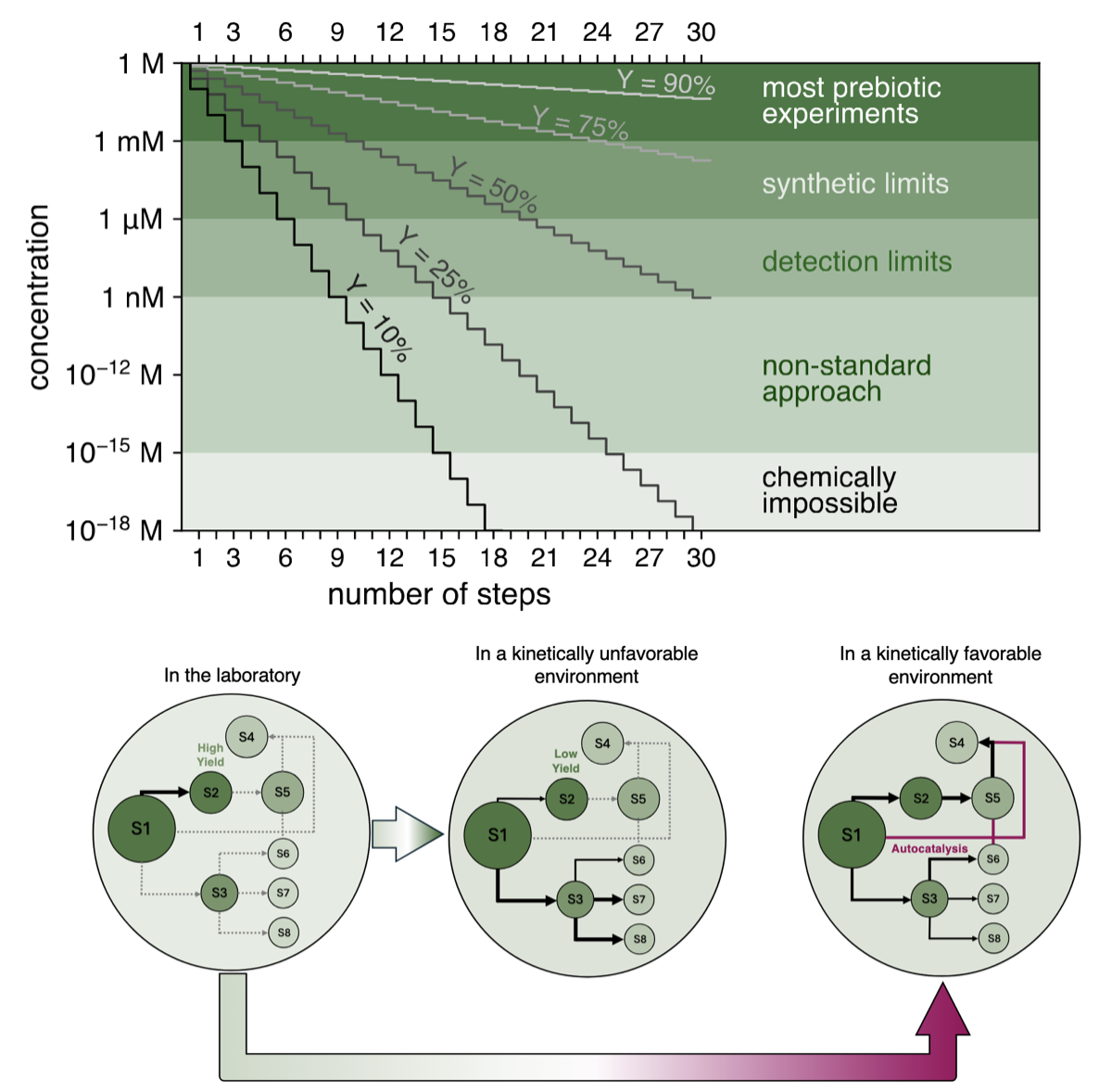
Fig. 4.82 Revisiting Reaction Rates: An illustration of the concentrations that result from a sequence of 30 reactions, with different yields shown, and highlighted regions suggesting loose associations with the ranges of resulting concentrations. Below that, a scheme showing how chemistry must work selectively and high-yield in the lab before emergent chemical properties in natural environments, such as autocatalysis, can be made manifest.#
Ultimately, prebiotic chemistry has to be “do-nothing” chemistry. It has to be chemistry that occurs spontaneously, building structure without human guidance, and this requires ordered chemical settings, however complex they may be. It cannot proceed from a simple mess or from excess clutter.
Futher Reading#
Benner, S.A., Bell, E.A., Biondi, E., Brasser, R., Carell, T., Kim, H.J., Mojzsis, S.J., Omran, A., Pasek, M.A. and Trail, D., 2020. When did life likely emerge on Earth in an RNA‐first process?. ChemSystemsChem, 2(2), p.e1900035.
Criado-Reyes, J., Bizzarri, B.M., García-Ruiz, J.M., Saladino, R. and Di Mauro, E., 2021. The role of borosilicate glass in Miller–Urey experiment. Scientific reports, 11(1), p.21009.
Clark, B.C. and Kolb, V.M., 2018. Comet pond II: Synergistic intersection of concentrated extraterrestrial materials and planetary environments to form procreative Darwinian ponds. Life, 8(2), p.12.
Genda, H., Brasser, R. and Mojzsis, S.J., 2017. The terrestrial late veneer from core disruption of a lunar-sized impactor. Earth and Planetary Science Letters, 480, pp.25-32.
Itcovitz, J.P., Rae, A.S., Citron, R.I., Stewart, S.T., Sinclair, C.A., Rimmer, P.B. and Shorttle, O., 2022. Reduced atmospheres of post-impact worlds: The early Earth. The Planetary Science Journal, 3(5), p.115.
Kim, H.J.; Furukawa, Y.; Kakegawa, T.; Bita, A.; Scorei, R.; Benner, S.A. Evaporite Borate-Containing Mineral Ensembles Make Phosphate Available and Regiospecifically Phosphorylate Ribonucleosides: Borate as a Multifaceted Problem Solver in Prebiotic Chemistry. Angew. Chem. 2016, 128, 16048–16052.
Miller, S.L., 1953. A production of amino acids under possible primitive earth conditions. Science, 117(3046), pp.528-529.
Miller, S.L., 1957. The mechanism of synthesis of amino acids by electric discharges. Biochimica et Biophysica Acta, 23, pp.480-489.
Pascal, R., Pross, A. and Sutherland, J.D., 2013. Towards an evolutionary theory of the origin of life based on kinetics and thermodynamics. Open biology, 3(11), p.130156.
Patel, B.H., Percivalle, C., Ritson, D.J., Duffy, C.D. and Sutherland, J.D., 2015. Common origins of RNA, protein and lipid precursors in a cyanosulfidic protometabolism. Nature chemistry, 7(4), pp.301-307.
Powner, M.W., Gerland, B. and Sutherland, J.D., 2009. Synthesis of activated pyrimidine ribonucleotides in prebiotically plausible conditions. Nature, 459(7244), pp.239-242.
Pross, A., 2016. What is life?: How chemistry becomes biology. Oxford University Press.
Ranjan, S., Wordsworth, R. and Sasselov, D.D., 2017. The surface UV environment on planets orbiting M dwarfs: implications for prebiotic chemistry and the need for experimental follow-up. The Astrophysical Journal, 843(2), p.110.
Rimmer, P.B., Xu, J., Thompson, S.J., Gillen, E., Sutherland, J.D. and Queloz, D., 2018. The origin of RNA precursors on exoplanets. Science advances, 4(8), p.eaar3302.
Rimmer, P.B., Thompson, S.J., Xu, J., Russell, D.A., Green, N.J., Ritson, D.J., Sutherland, J.D. and Queloz, D.P., 2021. Timescales for prebiotic photochemistry under realistic surface ultraviolet conditions. Astrobiology, 21(9), pp.1099-1120.
Rimmer, P.B., 2023. Origins of life on exoplanets. Conflicting models for the origin of life, pp.407-424.
Ritson, D. and Sutherland, J.D., 2012. Prebiotic synthesis of simple sugars by photoredox systems chemistry. Nature chemistry, 4(11), pp.895-899.
Sasselov, D.D., Grotzinger, J.P. and Sutherland, J.D., 2020. The origin of life as a planetary phenomenon. Science Advances, 6(6), p.eaax3419.
Todd, Z.R. and Öberg, K.I., 2020. Cometary delivery of hydrogen cyanide to the early Earth. Astrobiology, 20(9), pp.1109-1120.
Walton, C.R., Rimmer, P. and Shorttle, O., 2022. Can prebiotic systems survive in the wild? An interference chemistry approach. Frontiers in Earth Science, 10, p.1011717.
Walton, C.R., Rigley, J.K., Lipp, A., Law, R., Suttle, M.D., Schönbächler, M., Wyatt, M. and Shorttle, O., 2024. Cosmic dust fertilization of glacial prebiotic chemistry on early Earth. Nature Astronomy, pp.1-11.
White, S.B. and Rimmer, P.B., 2024. Do-Nothing Prebiotic Chemistry: Chemical Kinetics as a Window into Prebiotic Plausibility. Accounts of Chemical Research, 58, 1.
Wogan, N.F., Catling, D.C., Zahnle, K.J. and Lupu, R., 2023. Origin-of-life Molecules in the Atmosphere after Big Impacts on the Early Earth. The Planetary Science Journal, 4(9), p.169.
Zahnle, K.J., Lupu, R., Catling, D.C. and Wogan, N., 2020. Creation and evolution of impact-generated reduced atmospheres of early Earth. The Planetary Science Journal, 1(1), p.11.